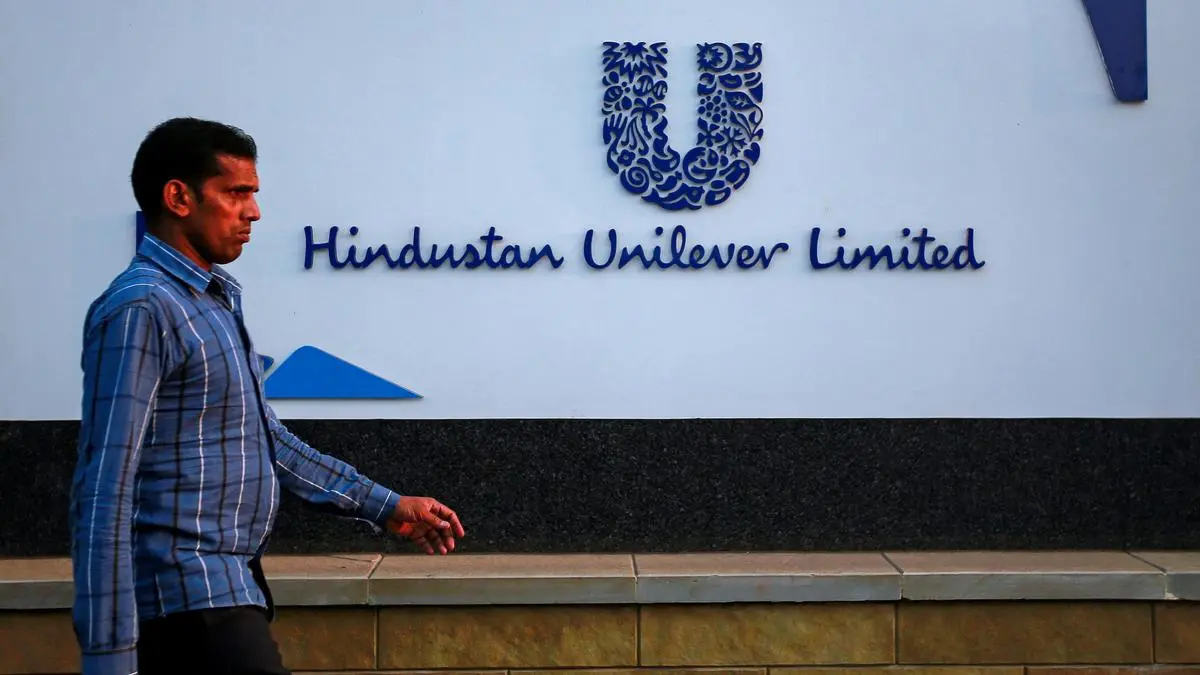
FILE PHOTO: A pedestrian walks past the Hindustan Unilever Limited (HUL) headquarters in Mumbai January 19, 2015. Hindustan Unilever Ltd, the Indian unit of Anglo-Dutch consumer group Unilever Plc , reported an 18 percent rise in quarterly profit, beating estimates, helped by a revival in consumer spending and lower raw material costs. REUTERS/Danish Siddiqui (INDIA – Tags: BUSINESS)/File Photo
| Photo Credit:
DANISH SIDDIQUI
Weakened consumer sentiment in the fast-moving consumer goods (FMCG) segment, along with heightened competition from new entrants eroding its dominance, has prompted segment leader Hindustan Unilever to make several key managerial changes
Last week it brought in Priya Nair, currently President, Beauty & Wellbeing at parent Unilever, as its head to replace Rohit Jawa, who will be stepping down on July 31. Nair’s appointment enforces the tough competition that the FMCG giant is facing, especially in the beauty segment.
“The average tenure of the MD & CEO at HUL is a high 7.24 years. Rohit Jawa’s tenure of 2 years has been extremely short. HUL is known as the CEO factory. Senior leadership, including the MDs, of HUL mostly move to global roles within Unilever or move to other major players as the ultimate leaders. HUL was always among the first recruiters in IIM,” Sanjeev Shukla, a brand consultant told businessline.
Over the last year or so, the company has rejigged key vertical heads.
Last year Srinandan Sundaram, ED, Foods & Refreshments took over as ED, Homecare, while Deepak Subramanian ED, Homecare moved to a new role overseas.
In April this year, Ranjeet Kohli was announced as the Executive Director, Foods, who replaced Shiva Krishnamurthy, who moved on from his role to pursue an external opportunity. Vivek Mittal was appointed as the Executive Director, Legal and Corporate Affairs. He took over from Dev Bajpai, who announced his early retirement.
Earlier, Arun Neelakantan was appointed as the Executive Director, Customer Development, HUL, replacing Kedar Lele, who left HUL to pursue an external opportunity.
New role for CFO
According to media reports, Ritesh Tiwari, the group CFO, is also likely to step down and move to another role in Unilever.
“Ritesh Tiwari continues to be the Executive Director, Finance, IT & Chief Financial Officer of the company. At HUL, we consistently nurture talent and groom leaders as part of our ongoing talent development process. If there are any developments in this regard, necessary disclosures will be made,” HUL said in a response to a query from businessline.
Experts have pointed out that the topline growth of the company has been affected in 2025.
“Under the leadership of Rohit Jawa, the performance did not match the expectations from the FMCG maker, which was directly seen in their topline growth and market cap. While other FMCG makers managed to sustain themselves last year, HUL was not able to do the same. The shift in the topline management is to re-energise the growth across the company,” Manish Chowdhury, Head of Research at StoxBox, told businessline.
“HUL is fundamentally a very strong company and has been in India for over 80 years. India is crucial for the company, with 15 per cent of their turnover and 50 per cent of its market capitalisation coming from the market. Globally, there has been a shake-up in Unilever. It is not that Unilever does not have talent. HUL has a deep talent pool. Priya Nair coming on board is good for the company and is a positive move,” said Lloyd Mathias, Business Strategist and Independent Director.
D2C growth impacting traditional FMCG companies
FMCG experts believe that the rising competition from Direct-to-Consumer (D2C) players and regional players has impacted the company’s growth over a period of time.
“Most of the D2C companies are doing well among consumers and giving traditional FMCG players immense competition. HUL is trying its best to think out of the box and quick commerce, and they are aware of the same. HUL is trying to modernise their strategy and campaign,” added Manish Chowdhury.
“Skincare and personal care are segments that are giving huge competition to traditional FMCG makers. D2C companies are extremely agile as compared to large FMCG companies, which take time to respond to the rapid changes and trends. HUL should increase its focus on its strength, which is the semi-urban and rural markets. The company has a strong presence,” added Sanjeev Shukla.
Published on July 17, 2025
About the Author