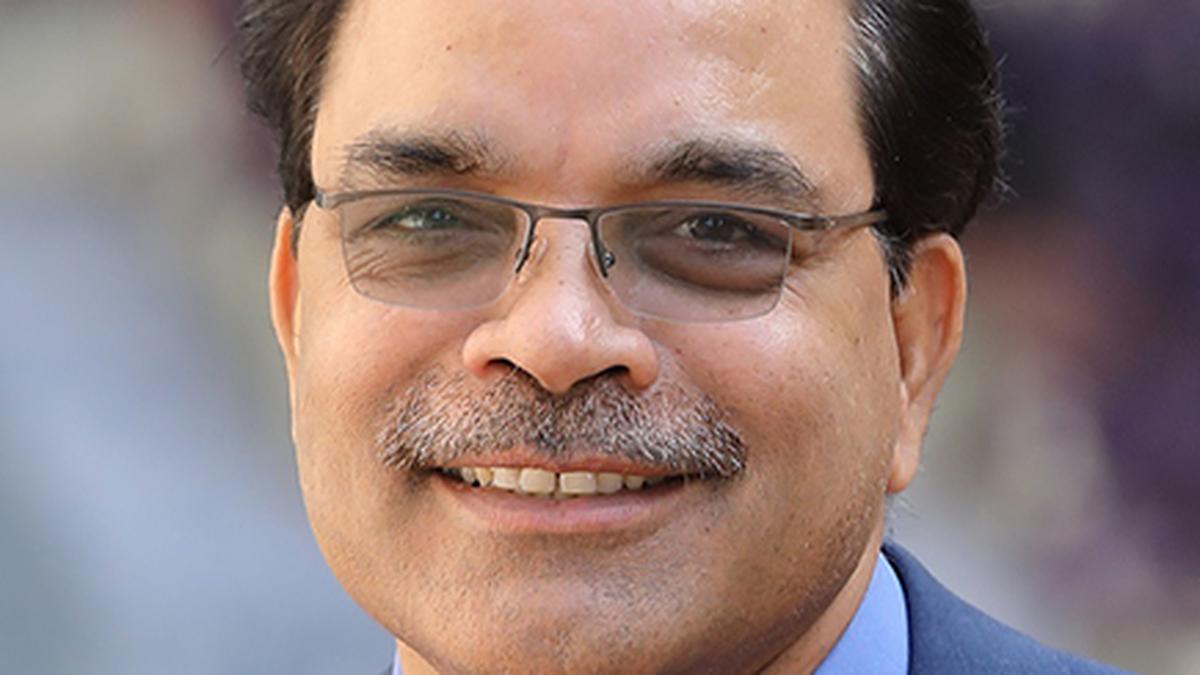
Vedanta Ltd delivered its highest-ever Q1 EBITDA of ₹10,746 crore for this June-end, with margins expanding to 35 per cent; but headline profit after tax (PAT) dipping 13 per cent year-on-year (y-o-y) to ₹4,457 crore. According to Arun Misra, Executive Director, Vedanta Ltd, deleveraging continues and the first phase of capex across ongoing projects nearing completion. In an interview to businessline, he talks about, debt-management, commodity pricing pressures, and strategic decisions on divestment and expansion; apart from dealing with the ongoing tussle with a US-based short-seller. Excerpts:
Q: Your Q1 PAT is reported at ₹5,000 crore after adjustments, but the actual PAT stands at ₹4,457 crore, a 13 per cent y-o-y decline. Why the variance?
A: The ₹5,000 crore figure reflects our operational PAT, which grew 13 per cent y-o-y. The ₹4,457 crore includes a one-time, non-operational charge of ₹757 crore related to oil and gas exploration costs under the OALP blocks. These are standard in upstream operations globally — when a block doesn’t yield viable output, the cost gets written off. So, the operational business is performing strongly, but accounting norms impact the reported PAT.
Q: Does this exploration write-off signal deeper issues in your upstream portfolio?
A: Not at all. The nature of the oil and gas sector is such that you invest in exploration knowing some wells won’t succeed. Global peers experience the same. We’re actively exploring new blocks and continue to pump in tech and management attention. It’s about building for future discoveries — this is part of the upstream investment cycle.
Q: Your EBITDA margin rose to 35 per cent, but commodity prices have softened. Can these margins be sustained?
A: Despite price pressures, we expanded margins by 81 basis points QoQ. This was driven by cost control and premiumisation (better value added products). For instance, in aluminium, we are producing more value-added products, and the cost of production (COP) is at a four-year low. Our zinc business reported its lowest-ever Q1 cost of production of about $1,000 per tonne. Further cost reductions are on, with the company tapping in renewable energy sources. So yes, we believe margins are sustainable.
Pricing softened both YoY and QoQ. That’s why cost management was crucial. Our margin expansion in such an environment proves our structural readiness. Value-added portfolio shifts also helped, like moving from basic metals to wire rods in aluminium.
Q: Vedanta has ₹22,137 crore in cash but ₹58,000-plus crore in net debt. Why haven’t you used more of the buffer to deleverage?
A: It’s a conscious capital strategy. We maintain flexibility between operational funding, strategic divestments, and refinancing. Cash is also used for future growth, not just deleveraging. Our net debt-to-EBITDA has already improved from 1.5x to 1.3x, and we aim to bring it closer to 1x.
Our funding cost at Vedanta dropped from 10.5 per cent to 9.2 per cent y-o-y. Through better refinancing, longer maturities, and more secure instruments, we’ve managed this drop. We expect interest cost to fall further, as we refinance upcoming maturities.
Around ₹17,000 crore is due for maturity this fiscal. Most of it is to secure debt, making refinancing feasible. We expect to manage this through a mix of roll-overs and internal accruals. Our businesses generate ₹20,000-25,000 crore, so we’re in a strong position.
Debts are primarily rupee – loans and less than 20 per cent are forex. So fluctuations are also under control.
Q: You recently sold a 1.6 per cent stake in Hindustan Zinc. Was this just a liquidity move or part of broader restructuring?
A: It’s a mix of both. Sale proceeds were over ₹3,000 crore. There was a gain of ₹1,944 crore from the sale; and that reflects value unlocked from our earlier investments. On the Vedanta Ltd consolidated books, this gain doesn’t reflect in the PAT. These moves are strategic — capital reallocation, deleveraging, and liquidity enhancement. We’ll continue evaluating such opportunities case by case.
Q: Should we expect more monetisation from other group assets?
A: We remain open to such options. Businesses grow; capital structures evolve. Monetisation decisions depend on valuations, market conditions, and our financing needs.
Q: You’ve ramped up alumina production at Lanjigarh. What risks do you see as you target 3 million tonnes?
A: Operationally, the ramp-up is progressing well, and cost of production is falling. Regulatory scrutiny is always on the radar, especially in Odisha, and we’re fully compliant. We’ve worked closely with stakeholders to ensure alignment with environmental norms.
The aluminium business is on track to achieve 3.1 mt of alumina and 2.8 mt of metal production by FY26-FY27.
Domestic market demand remains a key lever, with 75 per cent of zinc and 65 per cent of aluminium sales consumed within India, limiting the exposure to US tariffs. We expect aluminium CoP to fall below $ 1,700/t in H2FY26, aided by higher captive alumina share and low power costs.
Alumina cost is likely to decline $ 80-100/t over the next two quarters, driven by increased output from Lanjigarh; with 60 per cent of the cost reduction coming from an increased captive mix, while the remaining 40per cent will be due to softer market alumina prices.
Q: Vedanta added 950 MW of merchant power, taking total capacity to 3.83 GW. What’s the strategy here?
A: The merchant power addition supports our 2X vision, from metals to materials to energy. Power demand is rising, and pricing is turning favourable. We see merchant capacity as an earnings lever and a hedge against commodity cycles. Power realisations at Meenakshi and Athena are expected to stay strong at ₹5-5.7/unit, supported by PPAs.
Q: Will Vedanta India invest in Konkola Copper Mines?
A: No, there are no investment plans by Vedanta India in KCM. It remains a group-level asset. Our focus there is on stabilising operations and enhancing volumes.
Q: What’s the outlook for Balco’s profitability and any plans to acquire the remaining stake?
A: Balco is performing well. It contributes significantly to aluminium margins, which have improved from 27per cent to over 30 per cent. There’s no current proposal to acquire additional stake in Balco.
Q: Lastly, with capex requirements rising, how do you balance dividend payouts?
A: We’ve declared ₹7/share as interim dividend while pursuing large capex plans. That shows our confidence in cash flows. Dividend is a priority—but so is growth. We’re balancing both.
Q: Short-seller Viceroy Research has been critical of Vedanta. Is it worrying?
A: We are a conglomerate with high international exposure. There are multiple layers of international agency scrutiny that the company goes through.
I believe, investors have already reposed faith in the company and its finances. There isn’t much we need to do except focus on growth and pass on the benefits to investors. So, even if a particular institution may have their opinion. So it does not really require any fire-fighting or knee-jerk reaction from our end.
About the Author