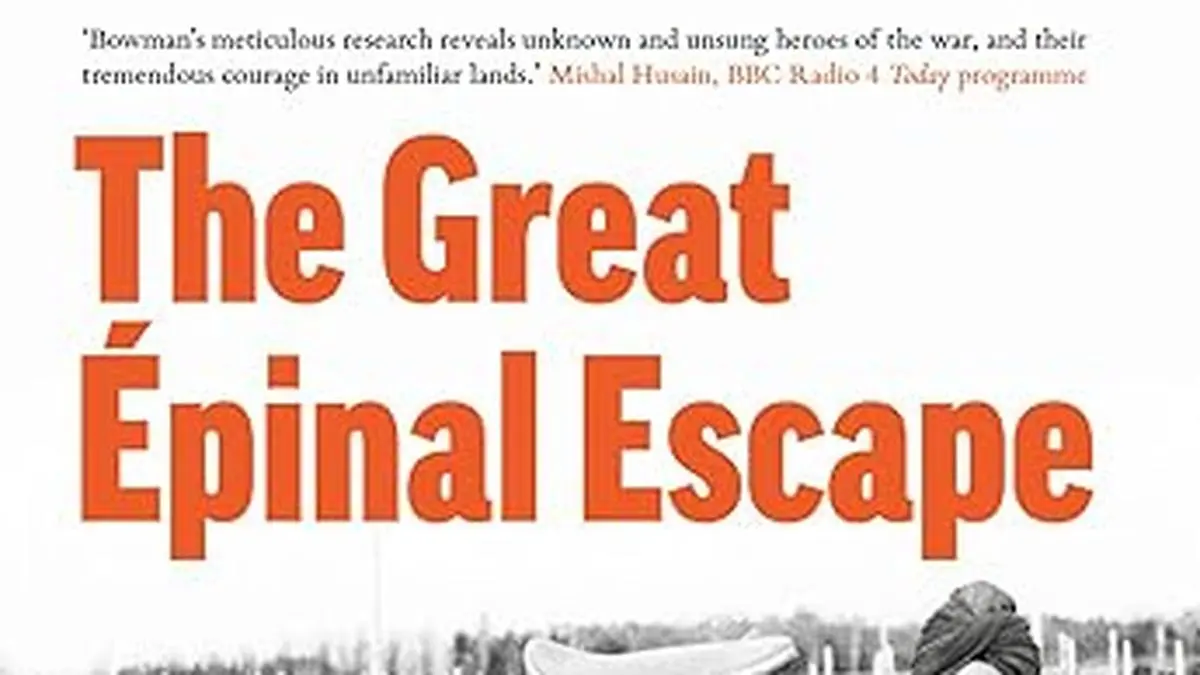
There are moments in history when the human spirit shines brightest against the darkest backdrop of conflict and despair. The Great Épinal Escape by Ghee Bowman captures one such extraordinary moment — a story of courage, hope, and defiance that transcends borders and time. It is a tale of Indian soldiers, far from home and imprisoned behind enemy lines during World War II, who seized a fleeting chance to reclaim their freedom through an audacious escape across war-torn France.
This book is not just a recounting of a daring breakout; it is a tribute to resilience, solidarity, and the unyielding desire for liberty that defines the very essence of humanity. Importantly, it is a story of brown soldiers whose contributions are often overlooked in Western narratives (case to point is Christopher Nolan’s epic 2017 war movie Dunkirk). As a soldier who has lived the realities of service, I found this narrative both deeply moving and profoundly inspiring and, importantly, long overdue.
The book tells the story of over 3,000 Indian prisoners of war (POWs) held by the Nazis in a camp near Épinal, France, and how, in May 1944, more than 500 of these men seized a rare opportunity to escape captivity and make a perilous journey across hostile territory to reach neutral Switzerland. For readers unfamiliar with military history, especially those outside the armed forces, this narrative reveals not only the extraordinary courage of these soldiers but also the complex human and geopolitical dynamics of the time.
Desperate dash for freedom
What struck me immediately was the sheer scale and success of this escape. While the famous “Great Escape” from Stalag Luft III in Poland — immortalised by Hollywood — has captured popular imagination, Bowman’s research reveals that the Épinal escape was even larger and more successful.
On 11 May 1944, just weeks before the D-Day landings, American bombers unintentionally bombed the Épinal POW camp, destroying parts of its walls. This unexpected event gave the imprisoned Indian soldiers a chance to flee. Unlike the meticulously planned tunnel escape at Stalag Luft III, the Épinal breakout was a spontaneous, desperate dash for freedom. The men grabbed whatever food and clothes they could, dodged gunfire, and set off across more than 100 kms of French countryside, fully aware that German soldiers and collaborators were hunting them.
From a military perspective, the escape exemplifies the resilience, quick thinking, and sheer grit that soldiers must cultivate. These men had been prisoners for up to four years, enduring harsh conditions and uncertainty. Yet, when the opportunity arose, they acted decisively, demonstrating a refusal to be broken by captivity. The diversity among the escapees —Hindus, Sikhs, Muslims, Gurkhas — reflects the pluralistic composition of the Indian Army, united by a common purpose despite different backgrounds. This resonates deeply with me, as it reflects the spirit of unity and discipline that is the hallmark of our armed forces.
Bowman’s narrative also highlights an essential but often overlooked aspect: the crucial role played by the local French population. Ordinary villagers and members of the French resistance risked their lives to shelter and guide the escapees through dangerous territory. Their courage and humanity stand out as a beacon of hope amid the brutality of war. This collaboration between Indian soldiers and French civilians is a reminder that war is not only about armies and battles but also about the bonds forged between people in extraordinary circumstances.
Challenging extant narratives
What makes this story compelling is how it challenges the dominant narratives of World War II that tend to focus on European or Western experiences. Indian soldiers contributed massively to the Allied war effort, yet their sacrifices have often been marginalised or forgotten, especially in popular culture and mainstream history. Bowman’s meticulous research, drawing on personal diaries, military archives, and even social media outreach to descendants, brings these unsung heroes into the spotlight. This is not just an academic exercise; it is a necessary correction to the historical record. For me, it underscores the importance of recognising all those who fought and suffered, regardless of nationality or colonial status.
The book also offers valuable lessons on leadership and resilience. The escapees had to organise themselves quickly, maintain morale, and navigate unfamiliar terrain while avoiding capture. Their success was not just a matter of luck but of collective determination and resourcefulness. These are qualities that any military professional, or indeed anyone facing adversity, can learn from. The story reminds us that courage is not just about grand battles but also about seizing fleeting opportunities and supporting one another in the face of overwhelming odds.
For readers unfamiliar with military history or for buffs of the genre alike, The Great Épinal Escape offers a gripping narrative that combines human drama, historical insight, and universal themes of hope and solidarity. It is a story of ordinary men who, despite being caught in one of history’s darkest moments, demonstrated extraordinary resilience and humanity. The book’s vivid descriptions and rare photographs make the experience tangible, while Bowman’s engaging prose ensures the story is accessible and compelling.
While the book is a remarkable and well-researched account, there are a couple of drawbacks worth noting for readers.
Narrowing in scope
Firstly, the book’s focus on a limited number of individual stories — primarily tracing the paths of eight escapees — means that some readers might feel it does not fully capture the broader collective experience of all 500 men who escaped or the 3,000 imprisoned. While this approach adds depth and personal connection, it sometimes narrows the scope, leaving certain aspects of the larger POW community and their varied experiences less explored.
Secondly, the narrative, though rich in detail and historical context, occasionally assumes a degree of prior knowledge about World War II military operations and geography, which might challenge readers unfamiliar with the period. Some sections could benefit from more background explanation to make the story more accessible to a general civilian audience, especially those reading in a non-military context.
Despite these minor limitations, the book’s strengths far outweigh its weaknesses, and these points do not diminish its importance as a long-overdue tribute to the courage and resilience of Indian soldiers during World War II. It enriches our understanding of the war by broadening the narrative to include voices that have been neglected for too long. For lay readers and military historians alike, it is a powerful reminder that history is made not only by famous generals or political leaders but also by countless individuals whose courage and determination shape the course of events. This book is a must-read for anyone interested in history, human endurance, and the untold stories that deserve to be remembered.
(The reviewer, Col. Arun Hariharan, is an Indian Army veteran and senior business continuity professional & also an author and poet based in New Delhi)
Check out the book on amazon.
Title: The Great Épinal Escape: Indian Prisoners of War In German Hands
Publisher: Westland Books
Published on August 20, 2025
About the Author