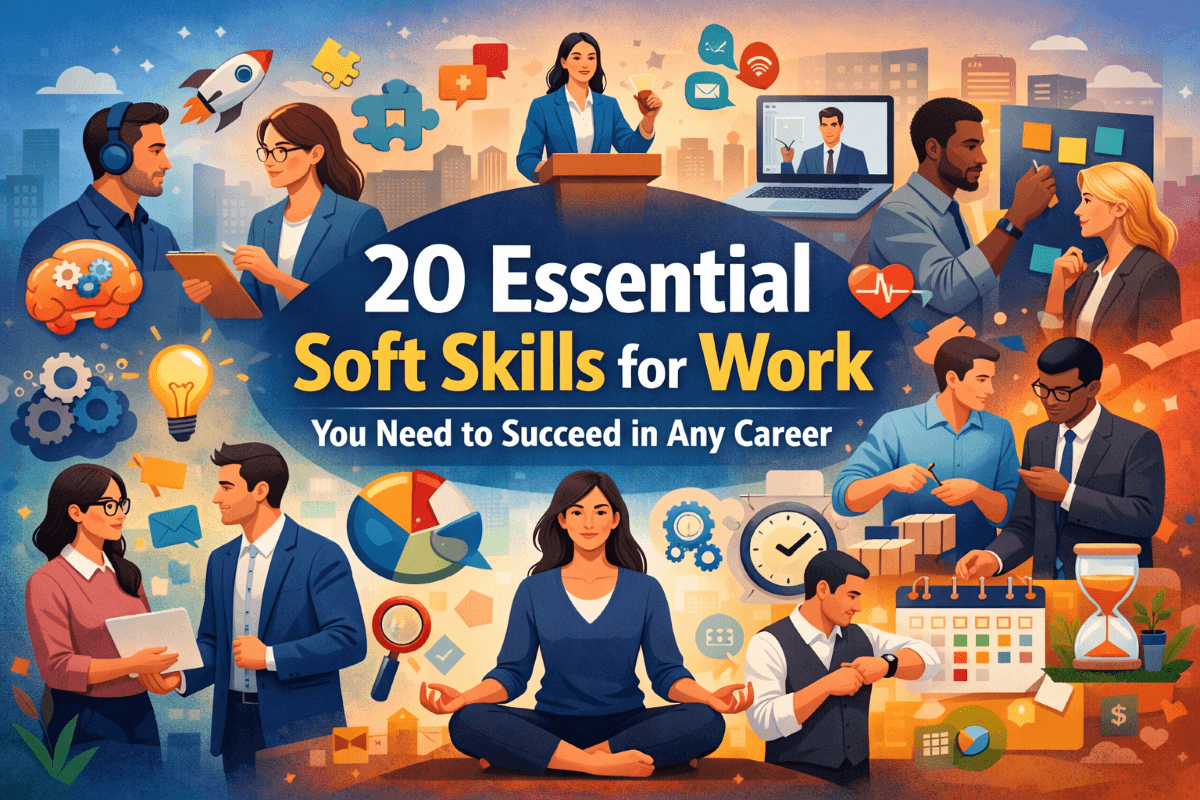
Soft skills for work are the foundation of long-term career success, shaping how you communicate, adapt, and collaborate in today’s fast-changing workplace. While technical skills may help you get hired, soft skills determine how well you perform, grow, and lead over time. Employers increasingly value these human-centred abilities because they improve teamwork, decision-making, productivity, and workplace culture. Understanding what soft skills are, why they matter, and how to develop them can significantly elevate your professional life and open doors to leadership opportunities across industries.
What Are Soft Skills for Work?
Soft skills for work are personal attributes, interpersonal abilities, and behavioural traits that influence how you interact with others and manage your responsibilities. Unlike hard skills, which are technical and measurable, soft skills relate to communication, emotional awareness, adaptability, and problem-solving. For example, knowing how to use a software tool is a hard skill, but explaining your ideas clearly to a team, handling feedback gracefully, or managing stress during deadlines are soft skills that make technical knowledge truly effective in real-world work environments.
Why Soft Skills Are Important in the Workplace?
Soft skills are important because work today is highly collaborative, diverse, and dynamic. Projects often require cross-functional teamwork, remote collaboration, and quick adaptation to change. Employees with strong soft skills build trust, resolve conflicts efficiently, and maintain professionalism even under pressure. For instance, a technically brilliant employee who lacks communication or emotional intelligence may struggle to work effectively with others. At the same time, someone with balanced soft skills can unite teams, motivate peers, and deliver consistent results.
Benefits of Developing Soft Skills for Work
Developing soft skills for work leads to better career growth, stronger professional relationships, and higher job satisfaction. These skills improve leadership potential, enhance problem-solving abilities, and help professionals navigate workplace challenges with confidence. Employees with strong soft skills are often promoted faster because they can manage people, communicate vision, and handle responsibility maturely. Additionally, soft skills reduce workplace stress, improve collaboration, and create a positive work culture that benefits both individuals and organisations.
Soft Skills Make More Money Than Strategy Ever Will: The Real Income Multiplier
20 Essential Soft Skills for Work

1. Active Listening
Active listening means truly focusing on what others are saying, understanding their message, and responding thoughtfully rather than reacting impulsively. In the workplace, active listening improves communication and reduces misunderstandings. For example, a manager who listens carefully to employee concerns can address issues early and build trust. A practical tip is to maintain eye contact, avoid interrupting, and summarise key points to confirm understanding.
2. Adaptability
Adaptability is the ability to adjust to change, learn new skills, and remain effective in unfamiliar situations. With constant technological and organisational changes, adaptable employees remain valuable. For instance, when a company adopts new software, adaptable workers learn quickly instead of resisting change. To build adaptability, stay open-minded, seek feedback, and view change as an opportunity rather than a threat.
3. Coaching and Mentoring
Coaching and mentoring involve guiding others to grow, improve skills, and reach their potential. Professionals who mentor colleagues strengthen team performance and leadership credibility. For example, a senior employee who helps a new hire understand processes accelerates team productivity. A useful tip is to offer constructive feedback and encourage learning through questions rather than instructions alone.
4. Cognitive Adaptability
Cognitive adaptability is the ability to think flexibly and adjust your approach in response to new information. In complex work environments, rigid thinking limits growth. For example, when a project plan fails, cognitively adaptable professionals reassess strategies and explore alternatives. To develop this skill, challenge assumptions, consider multiple perspectives, and stay curious.
5. Conflict Management
Conflict management involves handling disagreements calmly, fairly, and productively. Workplace conflicts are inevitable, but poorly managed conflicts damage relationships. For instance, addressing a misunderstanding through respectful dialogue prevents escalation. A practical tip is to focus on solutions, listen to all sides, and remain emotionally neutral.
6. Creativity
Creativity is the ability to generate new ideas, approaches, and solutions. Creative thinking drives innovation and problem-solving at work. For example, a creative marketer may design a unique campaign that attracts customers. To boost creativity, expose yourself to new ideas, brainstorm freely, and avoid dismissing unconventional thoughts too quickly.
7. Critical Thinking
Critical thinking is the ability to analyse information logically and make informed decisions. In the workplace, critical thinkers evaluate risks, identify patterns, and avoid assumptions. For example, before approving a proposal, a critical thinker examines data and potential consequences. A tip is to ask “why” and “how” before accepting conclusions.
Mastering Soft Skills: The Key To Thriving In An AI-Driven World
8. Cultural Sensitivity
Cultural sensitivity means respecting and understanding diverse backgrounds, beliefs, and perspectives. In global and multicultural workplaces, this skill promotes harmony and inclusion. For instance, being mindful of cultural communication styles prevents misunderstandings. To improve cultural sensitivity, learn about different cultures and practice empathy.
9. Decision Making
Decision-making involves choosing the best option after careful consideration. Strong decision-making skills improve efficiency and leadership effectiveness. For example, a project leader who evaluates timelines and resources can choose the most realistic plan. A helpful tip is to balance data analysis with intuition and experience.
10. Delegation
Delegation is assigning tasks effectively to improve team performance. Good delegation empowers employees and reduces burnout. For example, a manager who delegates based on individual strengths increases productivity. To delegate well, communicate expectations clearly and trust your team.
11. Emotional Intelligence
Emotional intelligence is the ability to understand and manage your emotions while recognising others’ feelings. High emotional intelligence improves teamwork and leadership. For instance, an emotionally intelligent leader handles criticism calmly and supports stressed employees. To develop this skill, practice self-awareness and empathy.
12. Networking
Networking is building positive professional relationships that support growth and collaboration. Strong networks provide learning opportunities and career advancement. For example, maintaining connections with colleagues can lead to referrals or partnerships. A tip is to focus on genuine relationships rather than transactional interactions.
13. Problem Solving
Problem-solving involves identifying challenges and finding effective solutions. In the workplace, strong problem solvers reduce disruptions and improve efficiency. For example, resolving a workflow bottleneck saves time and resources. To enhance this skill, break problems into smaller parts and explore multiple solutions.
14. Professionalism
Professionalism reflects responsible, respectful, and ethical behaviour at work. It builds credibility and trust. For instance, meeting deadlines and communicating respectfully demonstrate professionalism. A tip is to maintain consistency in behaviour regardless of pressure or circumstances.
15. Public Speaking
Public speaking is the ability to communicate ideas clearly and confidently before groups. This skill is essential for presentations, meetings, and leadership roles. For example, confident presenters influence decisions effectively. To improve public speaking, practice regularly and focus on clarity rather than perfection.
16. Resilience
Resilience is the ability to recover from setbacks and remain positive during challenges. Resilient professionals handle failure constructively. For example, learning from a rejected proposal strengthens future efforts. A tip is to view setbacks as learning experiences instead of personal failures.
17. Remote Collaboration
Remote collaboration involves working effectively with colleagues across locations and time zones. With remote work increasing, this skill is vital. For example, clear communication and timely responses keep virtual teams aligned. To improve, use collaboration tools effectively and set clear expectations.
18. Stress Management
Stress management is handling pressure in healthy ways to maintain performance and well-being. Poor stress management leads to burnout. For instance, prioritising tasks and taking breaks improves focus. A tip is to practice mindfulness and maintain work-life balance.
19. Teamwork
Teamwork is the ability to cooperate and work effectively with others toward shared goals. Strong teamwork increases productivity and morale. For example, collaborative teams solve problems faster. To enhance teamwork, communicate openly and appreciate diverse contributions.
20. Time Management
Time management involves organising tasks efficiently to meet deadlines. Effective time management improves productivity and reduces stress. For example, planning daily priorities ensures important tasks are completed. A tip is to use task lists and avoid multitasking excessively.
Conclusion
Mastering soft skills for work is a lifelong investment that shapes not only professional success but also personal growth, workplace harmony, and leadership effectiveness, so which of these 20 essential soft skills will you start developing today to future-proof your career?
7 Must Learn Soft Skills Timely To Achieve Success In Life
FAQs about Soft Skills for Work
1. Why are soft skills for work more important than technical skills?
Soft skills enable effective communication, collaboration, and leadership, which determine how well technical skills are applied in real situations.
2. Can soft skills be learned and improved?
Yes, soft skills can be developed through practice, feedback, self-awareness, and continuous learning.
3. Which soft skills are most valued by employers today?
Communication, adaptability, emotional intelligence, teamwork, and problem-solving are highly valued across industries.
4. How do soft skills impact career growth?
Strong soft skills improve performance, leadership potential, and promotion opportunities by enhancing relationships and decision-making.
5. How can I start improving my soft skills at work?
Begin by seeking feedback, observing effective colleagues, practising self-reflection, and applying small improvements consistently.
_____________________________________________________________________________________________________________
About Simply Life Tips
Simply Life Tips is dedicated to providing you with practical, science-backed strategies for personal growth, leadership, and emotional well-being. Our mission is to simplify the path to success, helping you navigate life’s complex challenges with clarity, confidence, and a growth-oriented mindset.
_____________________________________________________________________________________________________________
Thank you for investing your time with us today. I sincerely hope these insights empower you to take a positive step forward in your journey. If this post resonated with you, please consider sharing it with your friends or colleagues. Your support is what allows us to keep sharing knowledge and building a community of growth-minded individuals. Let’s keep moving forward together!
PVM

Mathukutty P V is a Blogger, YouTuber, and Content Writer who transitioned into a “Free Lifestyle” after choosing voluntary retirement in 2017. He is the founder of Simply Life Tips, a mission-driven platform dedicated to inspiring others through practical wisdom and life lessons. Driven by a love for continuous learning and self-growth, Mathukutty shares knowledge gathered from years of reflection to help his readers live with more purpose and positivity.
About the Author