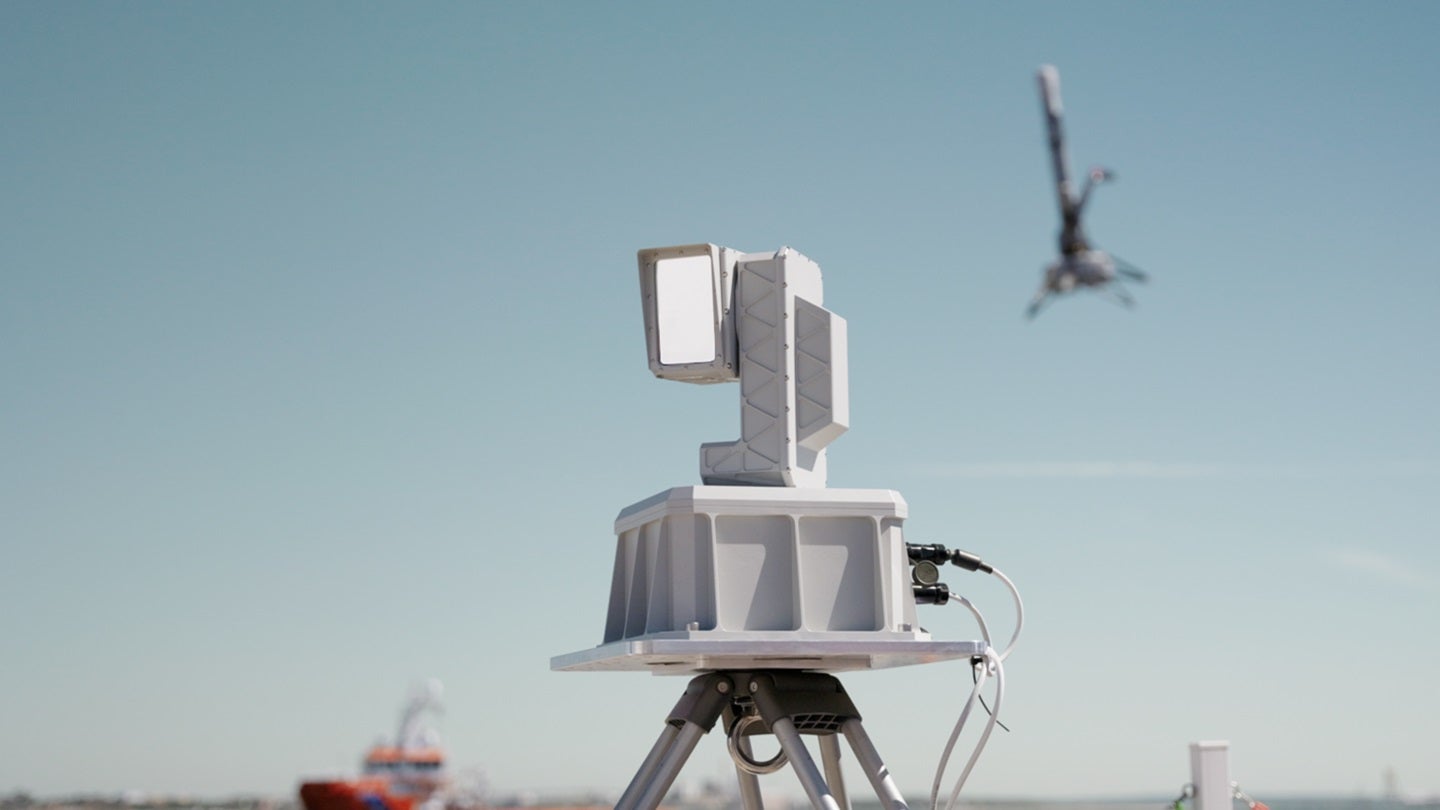

Astrolight, a Lithuanian space-tech company, is set to trial its POLARIS laser terminal on French shipbuilder Naval Group’s vessels, with the goal of assessing the technology for possible future integration.
In this connection, the parties have entered into a Memorandum of Understanding (MoU).

Discover B2B Marketing That Performs
Combine business intelligence and editorial excellence to reach engaged professionals across 36 leading media platforms.
Find out more
The agreement was signed during Lithuanian Maritime Defence Industry Days in Vilnius, where a range of companies, including Naval Group, Belgium Naval & Robotics, and Exail, presented proposals for a new vessel for the Lithuanian Navy.
The Lithuanian Engineering and Technology Industry Association organised the event.
Naval Group is currently designing a new multi-purpose offshore patrol vessel for Lithuania’s Navy and is considering equipping the ship with POLARIS.
The collaboration will see both companies test the technology to determine its suitability in maritime defence environments.
Naval Group international procurement and cooperation manager Simon Blanc said: “We’re excited to have Astrolight on board for the Lithuanian Navy’s new ship. Together, we aim to provide Lithuania with a comprehensive, jam-resistant communication solution for the Baltic Sea and strengthen European defence capabilities.”
Astrolight’s POLARIS laser terminal employs narrow-beam light communication, which is designed to resist detection and interference.
The POLARIS system has recently undergone successful tests with both NATO and the Lithuanian Navy.
Tests included demonstrations at Nato’s REPMUS/Dynamic Messenger exercise, which specialises in maritime unmanned systems, as well as Latvia’s DiBax exercise.
These trials featured ship-to-ship and land-to-land communication links that used high-bandwidth, undetectable connections.
Laser-based communication is being considered as an additional method to current systems to address concerns around data security, bandwidth availability, and susceptibility to jamming.
The new vessel under development by Naval Group is intended to be adaptable for multiple mission types including combat operations, transport duties, launching unmanned aerial vehicles, and serving as a floating hospital during emergencies.
Astrolight CEO Laurynas Mačiulis said: “With the growing threat of electronic warfare at sea, especially in the Baltic, Europe needs ships that can operate reliably in these challenging conditions.
“Our interference-resilient laser technology, already successfully tested by Nato and the Lithuanian Navy, provides a secure way to communicate in the most challenging environments.”

Sign up for our daily news round-up!
Give your business an edge with our leading industry insights.
About the Author