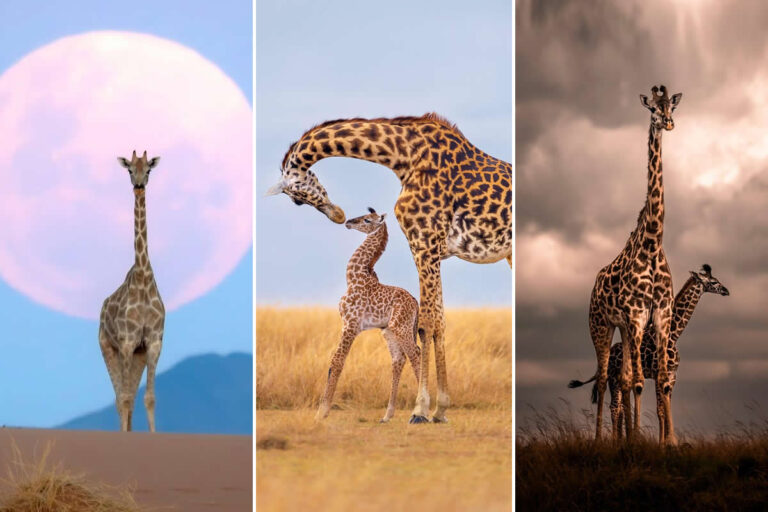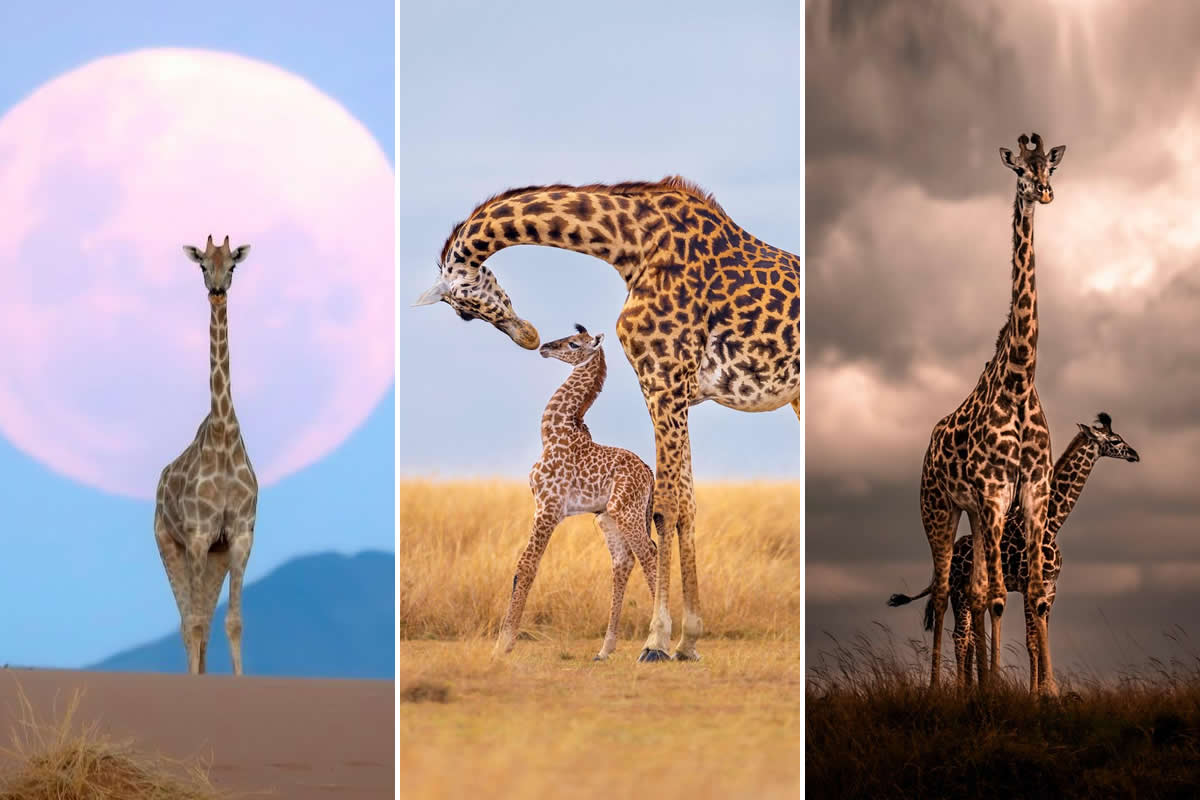
The spotlight is on giraffes, and this year’s Remembering Wildlife Giraffes Competition delivered a global wave of jaw-dropping talent. Twenty winning images were selected from photographers across the UK, India, the USA, Germany, Australia, Poland, Kenya, Switzerland, and South Africa. Each frame captures the grace, mystery, and wild beauty of one of Earth’s most iconic animals.
Founded by British wildlife photographer and conservationist Margot Raggett MBE, Remembering Wildlife blends art with action. After witnessing a poached elephant in Kenya in 2014, Raggett turned heartbreak into purpose, launching a book series that raises funds for endangered species. Since 2016, the project has donated more than £1.26 million to over 82 conservation projects in 35 countries.
This latest chapter, Remembering Giraffes, arrives on 12 October 2026 as the 11th title in the celebrated series. The book will feature these 20 winning competition photos alongside powerful work from world-class wildlife photographers, including judges Wim van den Heever and Daryl Balfour.
Why does it matter? Giraffe populations have declined by around 40% over the last three decades due to habitat loss, poaching, and civil unrest. Their quiet nature has made their decline easy to miss.
But these images speak for themselves. They’re more than pretty pictures—they’re a rally cry. A reminder that when wildlife is protected, recovery is possible. And yes, giraffes still belong where they’ve always stood tallest: in the wild.
You can find more info:
1. “Into the sun” by Uli Hergesell-Bulian, Germany, Masai giraffe
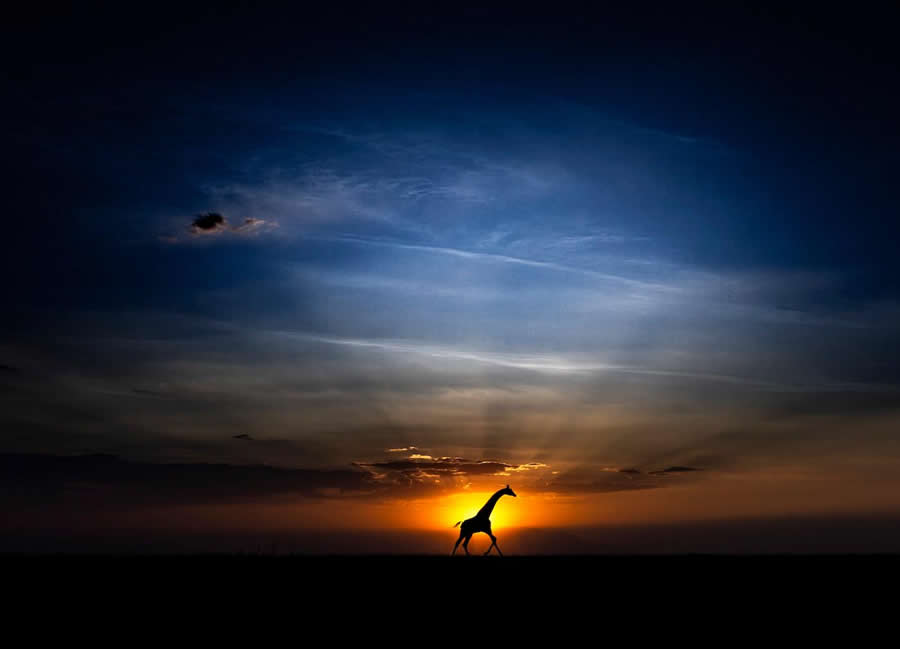
“Giraffe at sunset on the dry lakebed in Amboseli National Park, February 2026.”
2. “Under Mother’s Guidance” by Tom Way, UK, Masai giraffe
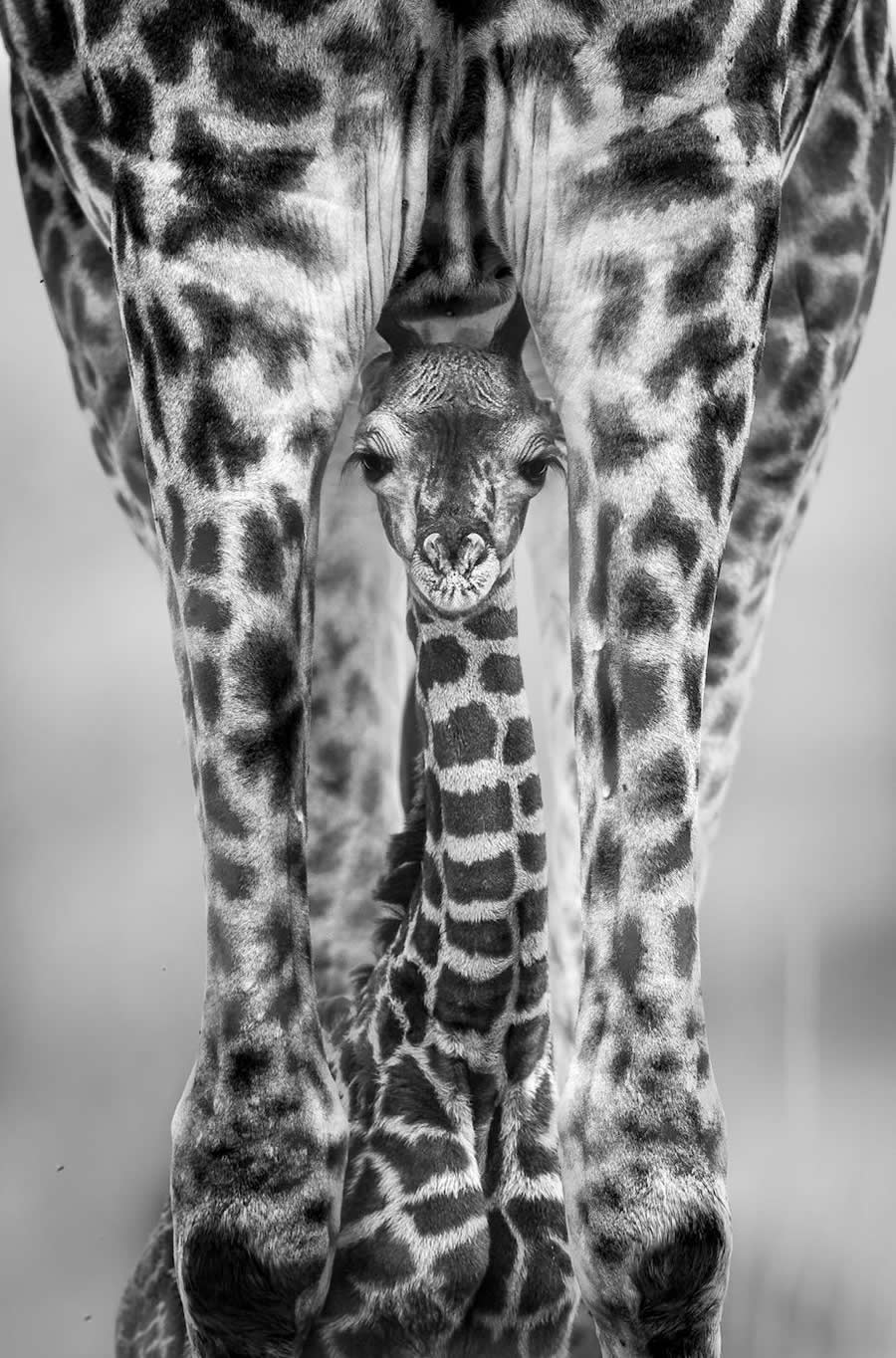
“This young giraffe was no more than a few hours old when we first found both the mother and infant in a small thicket close to the open plains of Kenya’s famous Mara North Conservancy. We watched at a distance as the young giraffe suckled, still wobbly on its legs before coming forwards towards us perfectly framed between the mother’s legs.”
3. “Duel at Dawn” by Mark Nissenbaum, USA, South African giraffe
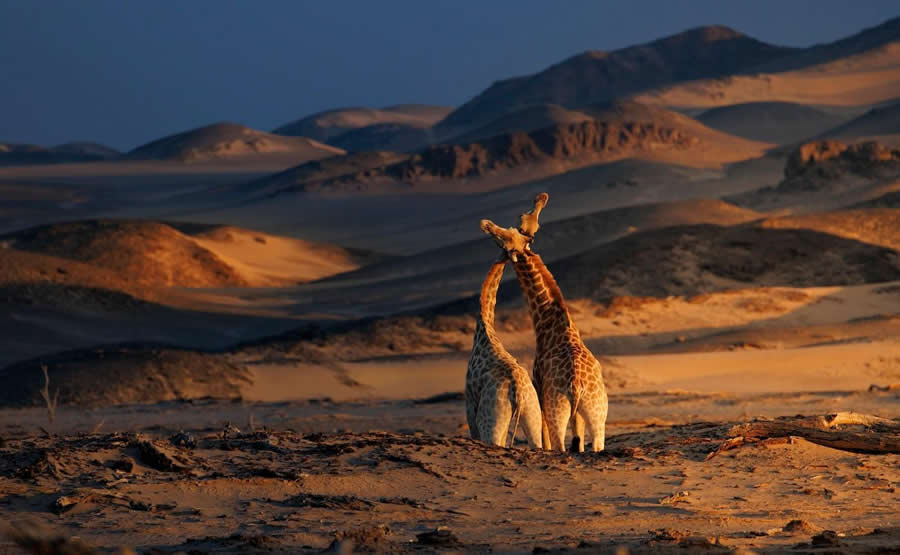
“At dawn in the dry Hoanib, the silence was broken by a hollow, percussive thud that echoed off the river banks. Looking out of the vehicle, we found two beautiful bull giraffes against an amber-and-violet sky of the breaking dawn. They stood shoulder-to-shoulder, hurling their weighted heads like pendulums. Each blow from their ossicones landed with a sickening resonance, a rhythmic struggle for dominance played out in the first golden light of the desert morning.”
4. “Fire!” by Vicki Santello, USA, Masai giraffe
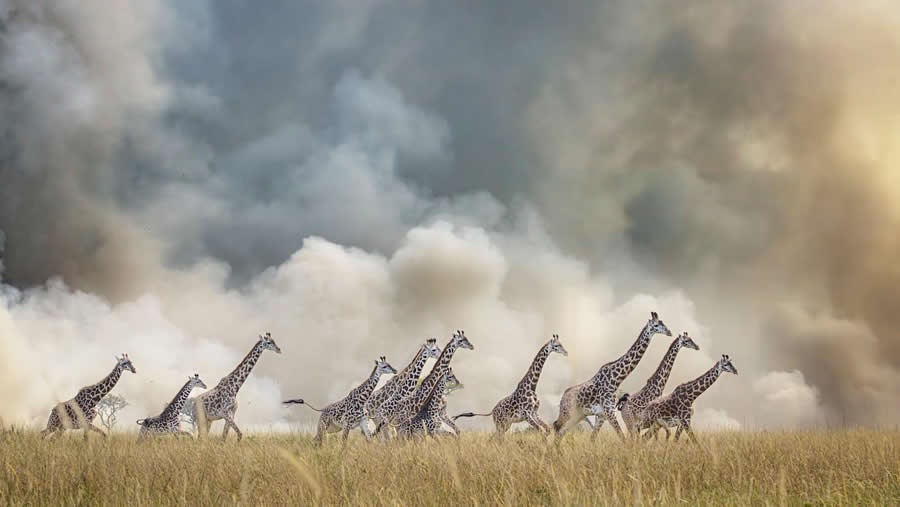
My guide and I saw rangers starting a controlled burn so we drove over to the area for opportunities that might develop. A controlled burn spewed thick smoke clouds across the savannah. Animals of all species were desperate to escape the flames. I felt their desperation and urgency from my seat in my safari vehicle now parked in the roadside.”
5. “A Tender Moment – Newborn Giraffe” by Eric Albright, USA, Masai giraffe
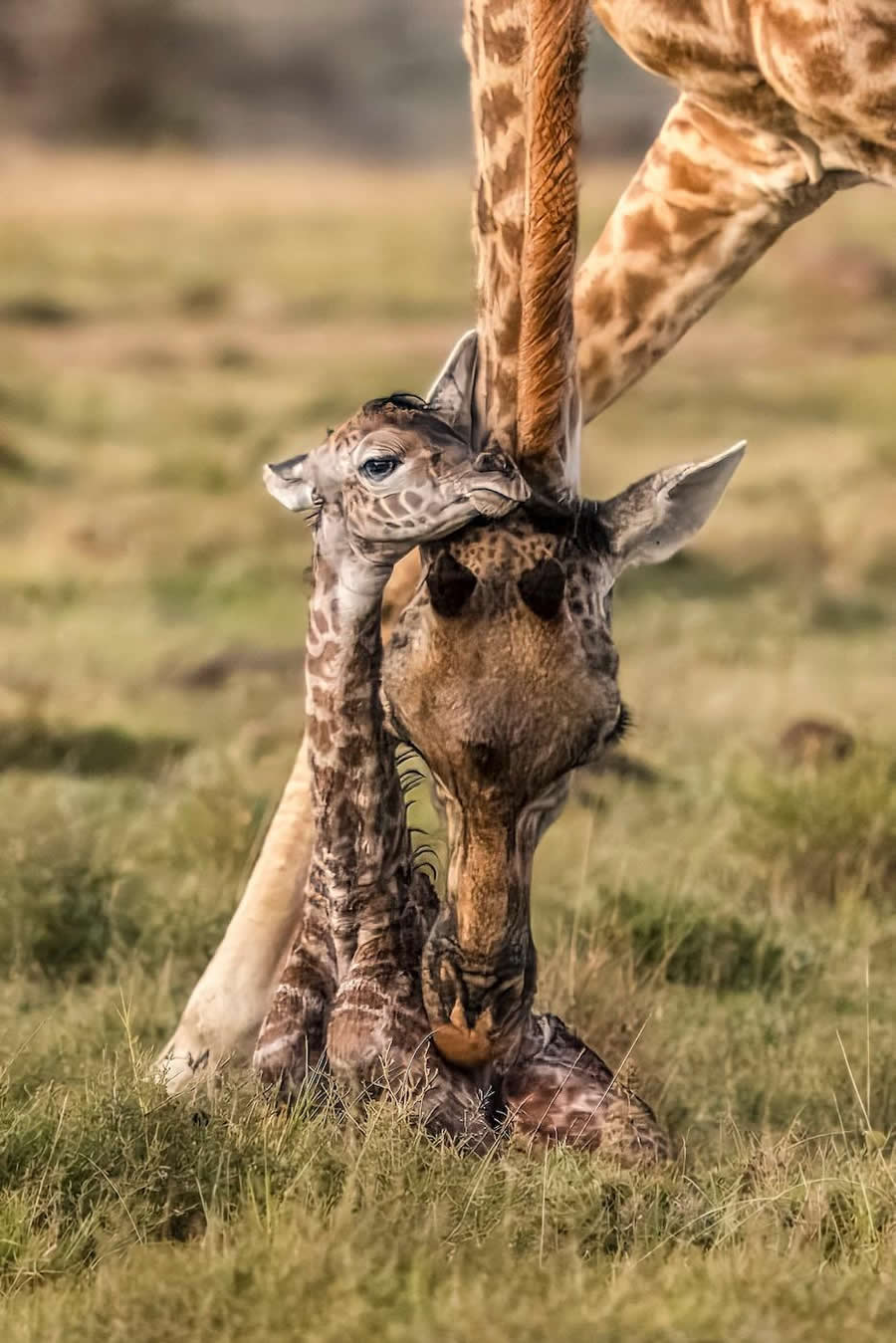
“A newborn Masai giraffe appears to nuzzle its mother as she attempts to clean it shortly after birth.”
6. “Storm – A new life is born” by Terri Innes, UK, Masai giraffe
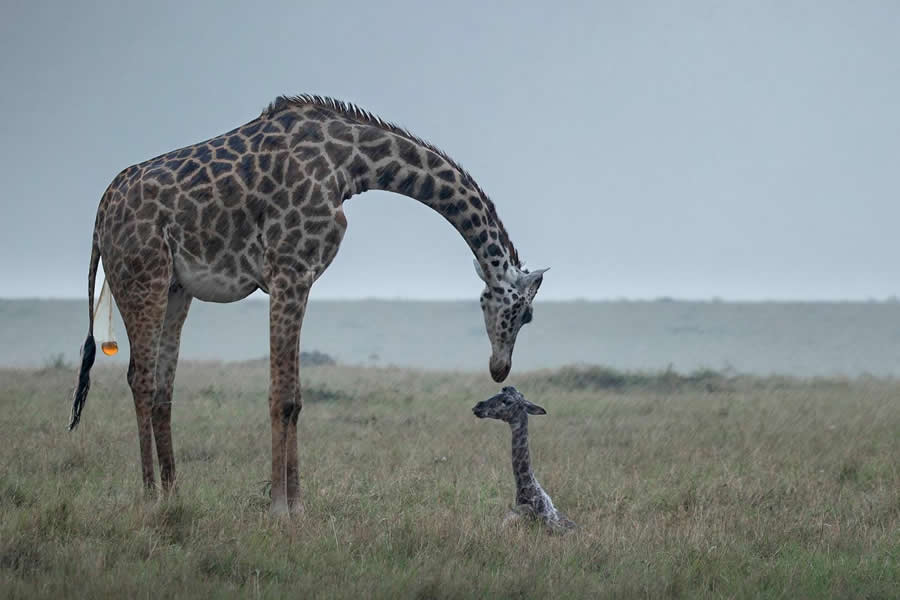
“The wind and the rains were heavy, visibility and lighting was low. Our camera equipment and ourselves were getting drenched. We were heading back to camp when we spotted this beautiful graceful lady giving birth. Not the ideal conditions out in the open plains of the Maasai Mara with the rains lashing her. I watched as the baby dropped to the sodden earth and waited with bated breath until it started to move.”
7. “Front Row Seat” by Tomasz Szpila, Poland, Masai giraffe
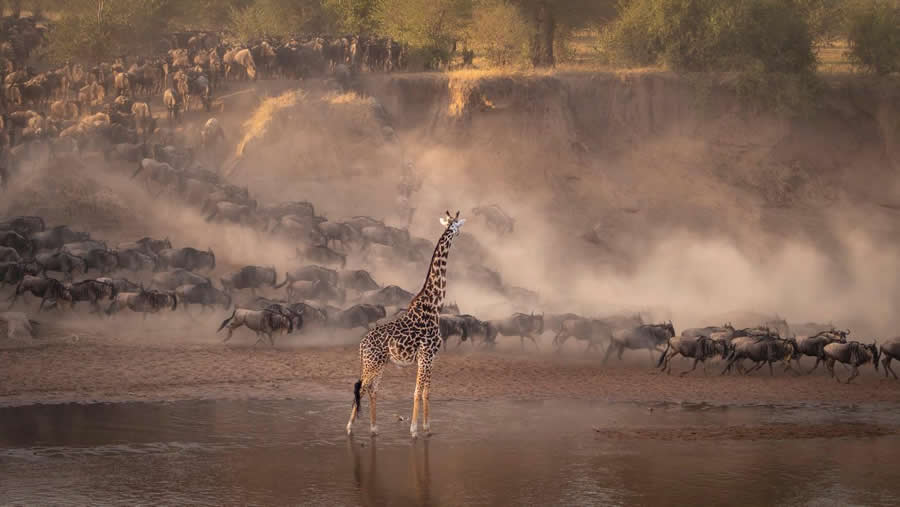
“It was another sunny day in the Serengeti. We had visited this particular stretch of the Mara River many times before, so we weren’t expecting anything out of the ordinary. As soon as we tucked our vehicle into the brush to avoid spooking the herds gathering on the far bank, the animals, to our surprise, began their crossing much earlier than usual. As we cautiously drew closer, we realised there wasn’t another vehicle in sight.”
8. “Giants on the move” by Ivan Glaser, Australia, Masai giraffe
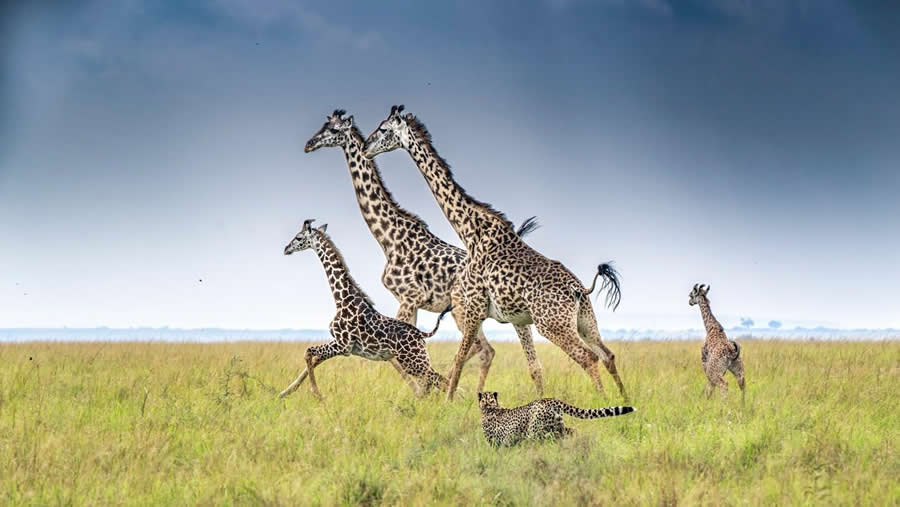
“A Cheetah tries the seemingly impossible by making a genuine attempt at hunting a young giraffe. It was incredible to witness the adult giraffe in full flight as they protected their young ones.”
9. “Stepping Over” by Laura Romin, USA, Masai giraffe
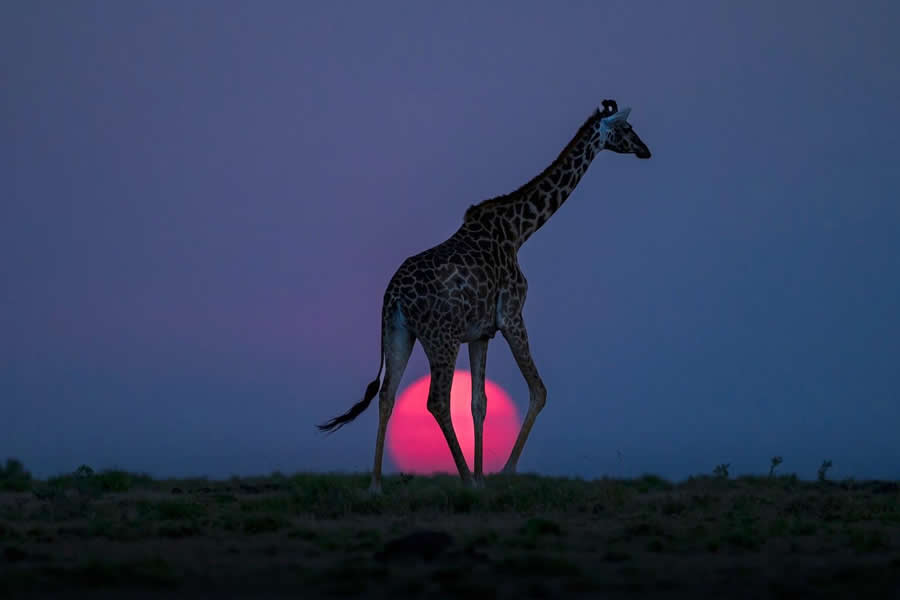
“Sunrises and sunsets in the Maasai Mara Reserve, Kenya, always feel otherworldly. In this moment, the giraffe seems to lift its leg right over the sinking sun, which washes the sky in deep purples and soft pink-red light. I watched him move steadily across the plains and waited for that perfect stride as he aligned with the fiery ball. March 2025. Nikon Z9, Nikkor 400mm f/2.8 TC lens.”
10. “Stormy Giraffes” by Uli Hergesell-Bulian, Germany, Masai giraffe
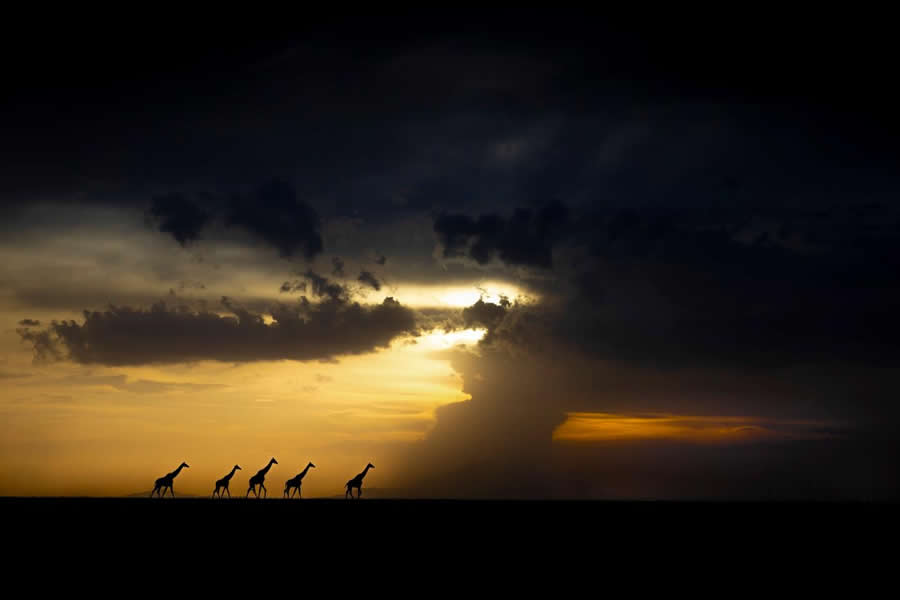
“5 Giraffes under a dramatic sky crossing the dry lakebed.”
11. “Giraffe Splash” by Zita Quentin, USA, Masai giraffe
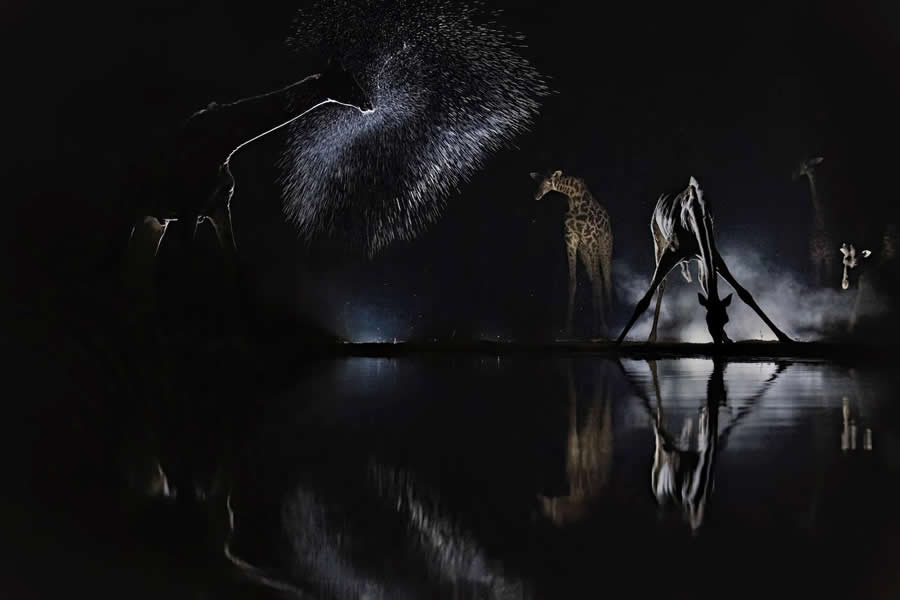
“A group of Masai giraffes came to the watering hole to drink one night. When one of the giraffes lifted its head from the water, it splashed water droplets around while the others were still drinking or just standing in the background. This was a magical night in a photographic hide in the Shompole Wilderness in Kenya. They were very shy and we minimised the lights on them by turning on the backlighting only.”
12. “Second Chance” by Georgina Goodwin, Kenya, Masai giraffe
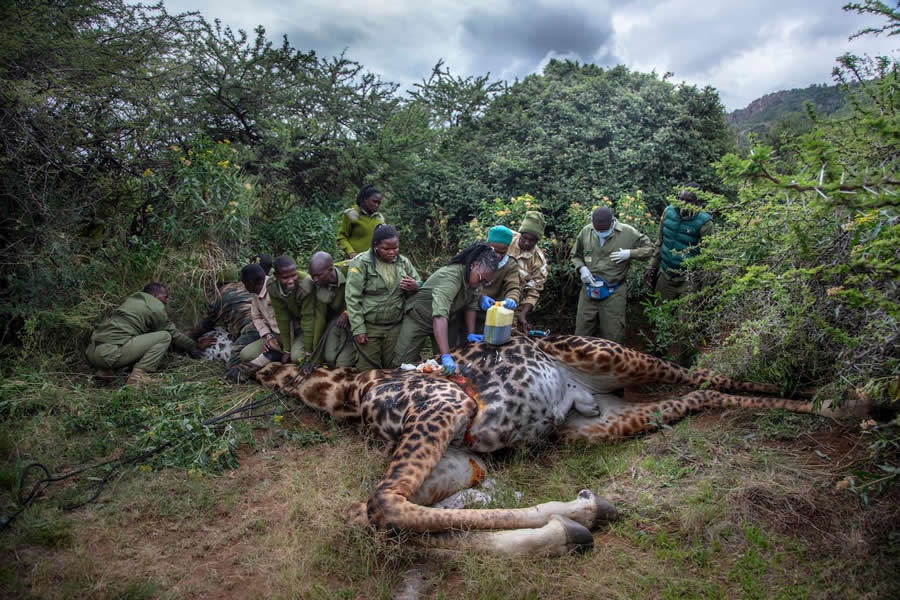
“Wildlife veterinarians from Kenya Wildlife Service (KWS) and Olderkesi Conservancy Rangers work together to treat a male Masai giraffe that had been injured by a poison arrow in Olderkesi Conservancy, southern Maasai Mara, Kenya. The giraffe was darted and safely immobilised so the KWS veterinary team could remove the arrow, clean the wound and administer treatment before the giraffe was revived and released back into the wild.”
13. “Giraffe & Moon” by Kyle Goetsch, South Africa, South African giraffe
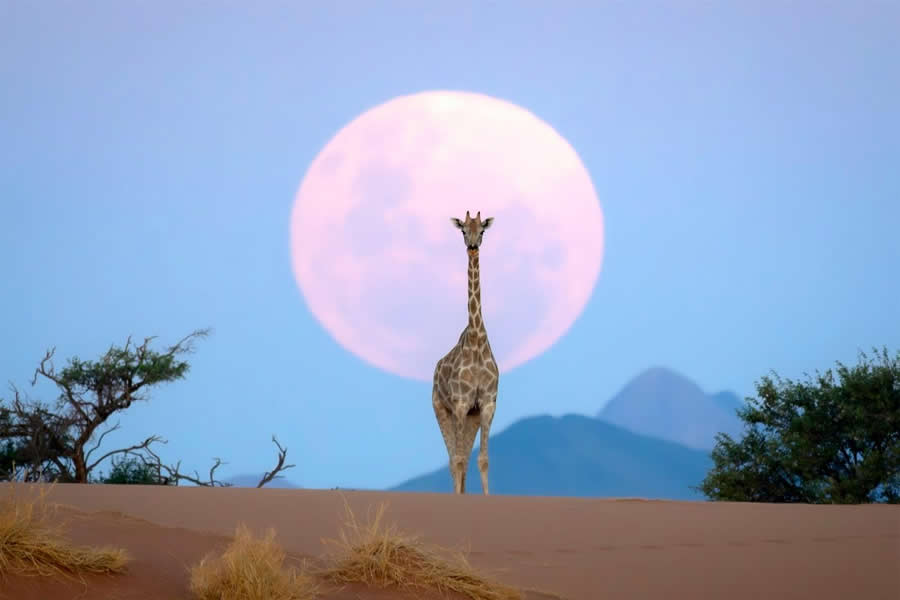
“I was set up at the Family Hideout lodge in NamibRand, Namibia in May 2024, waiting to photograph the full moon rising over a dead tree on a sand dune. NamibRand forms part of the vast Namib-Naukluft National Park, one of the oldest desert landscapes on Earth, and its open spaces often create unexpected photographic opportunities. I knew there were giraffes somewhere on the far side of the dune, but I wasn’t expecting them to come anywhere near where I was shooting.”
14. “Gold Dust” by Ranganathan Mukkai, India, Reticulated giraffe
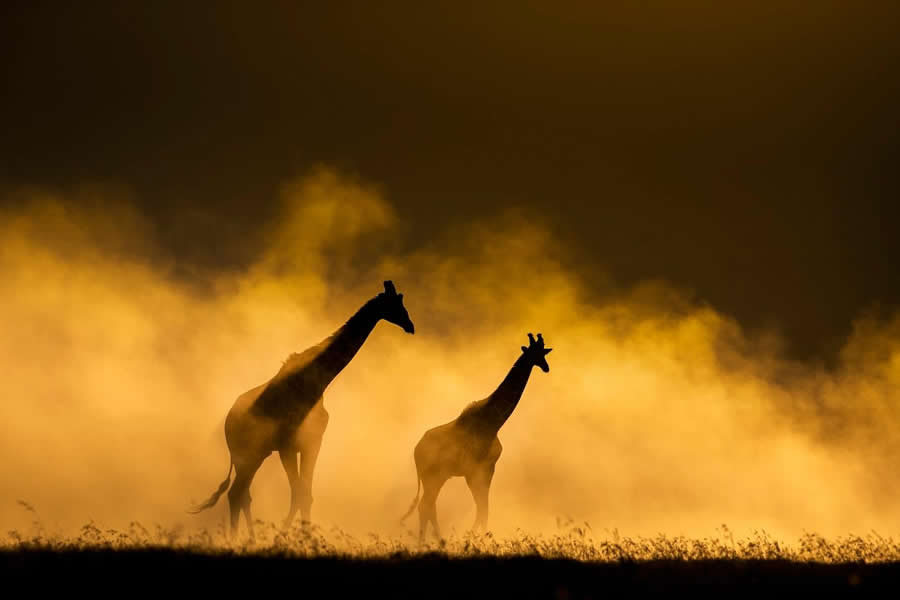
“This image was taken on a windy evening when the dust was flying around and we were waiting with the group of giraffe to get them into position against the sun to provide the glow in the flying sand and dust.”
15. “Motherhood” by Nili Gudhka, Kenya, Masai giraffe
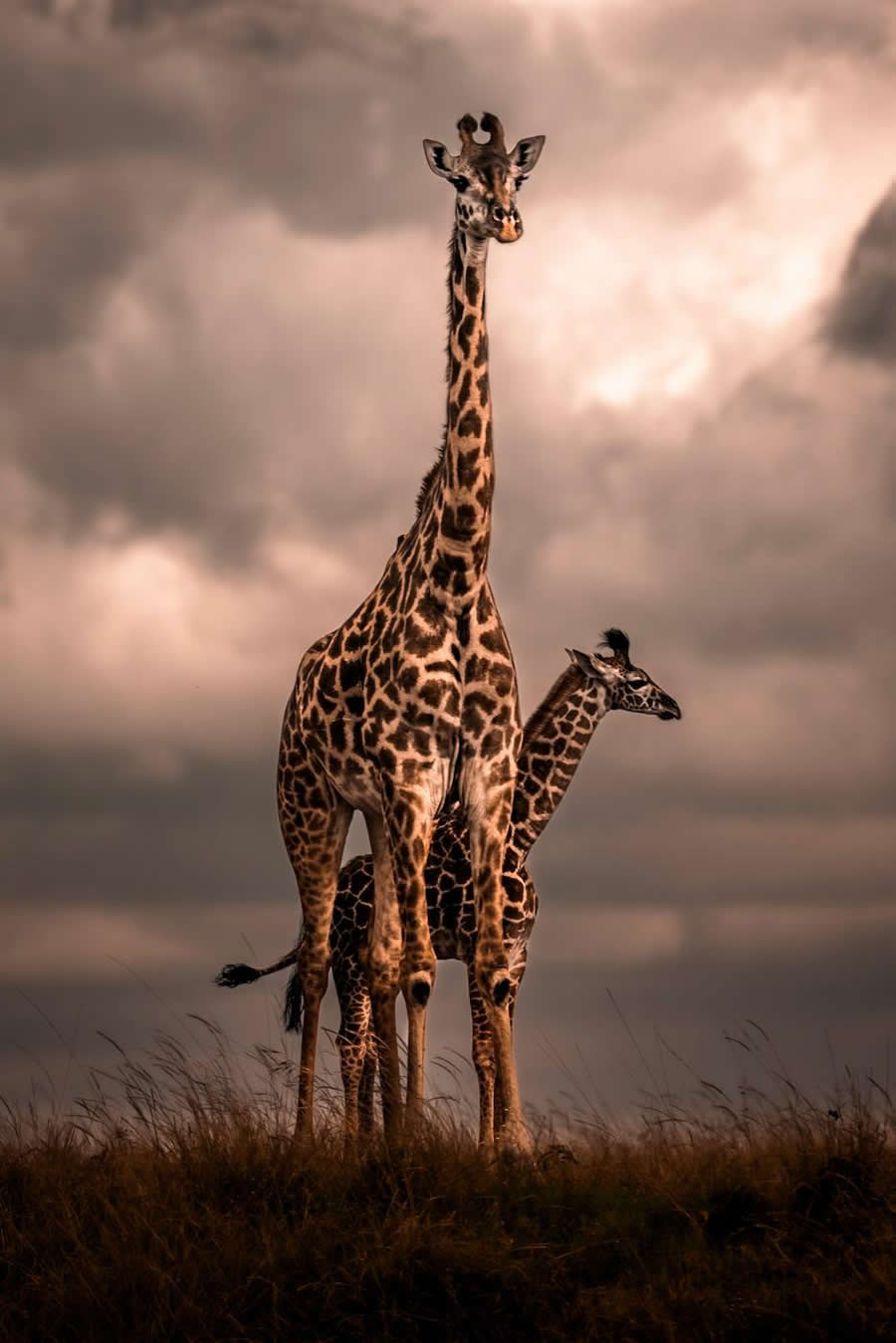
“A Masai giraffe mother stands tall over her calf, watchful and protective as storm clouds gather over the savanna.”
16. “Drawn by Light” by Nadine Villabruna, Switzerland, Reticulated giraffe
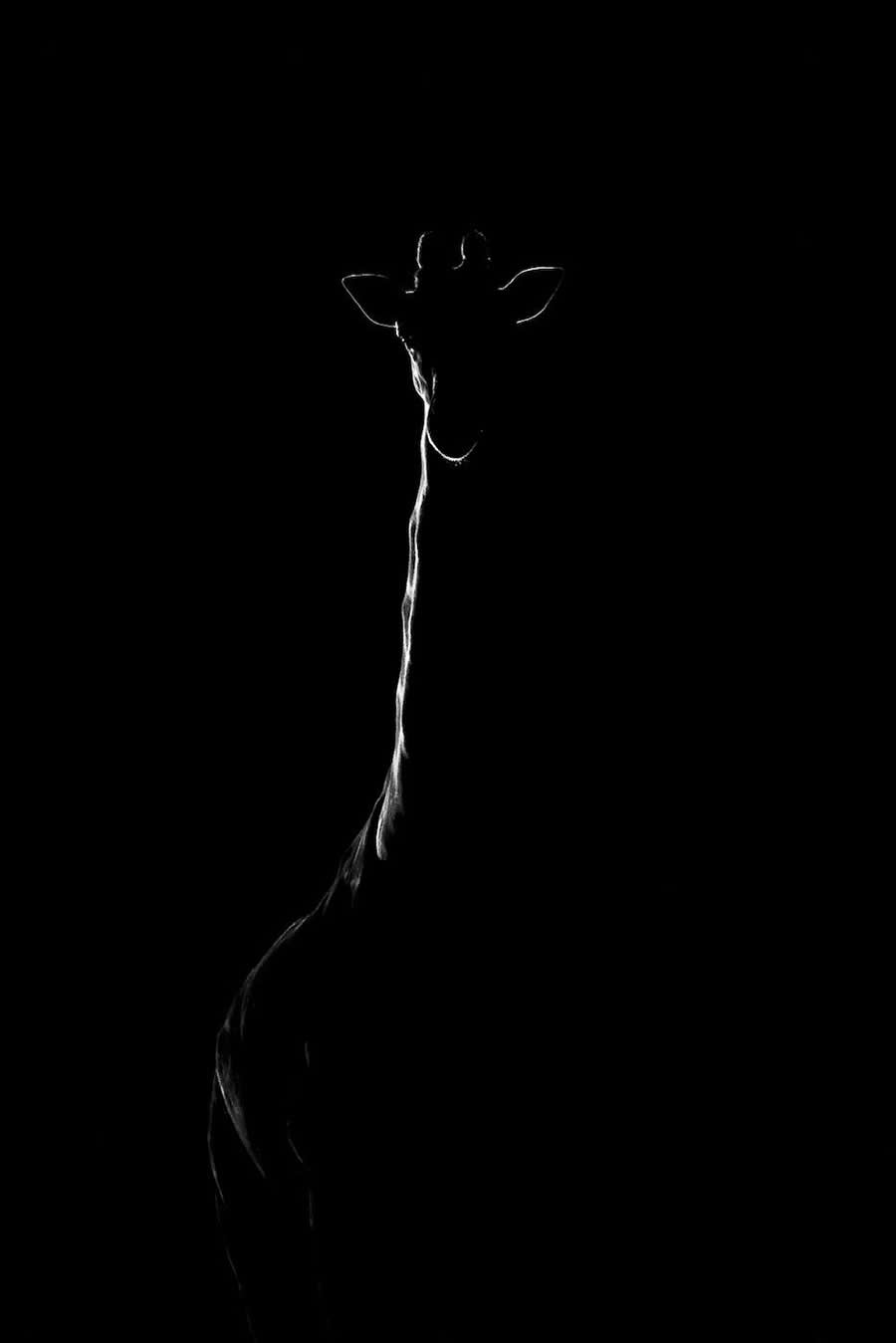
“In the fading light at Solio Game Reserve, only a thin rim of light outlines the shape of a giraffe against the darkness. The gentle glow traces the ears, head, and long neck so delicately that the animal almost appears sketched onto the night sky, like a simple line drawing emerging from the shadows.”
17. “A Giraffe Impression” by Paul Joynson-Hicks, UK, Masai giraffe
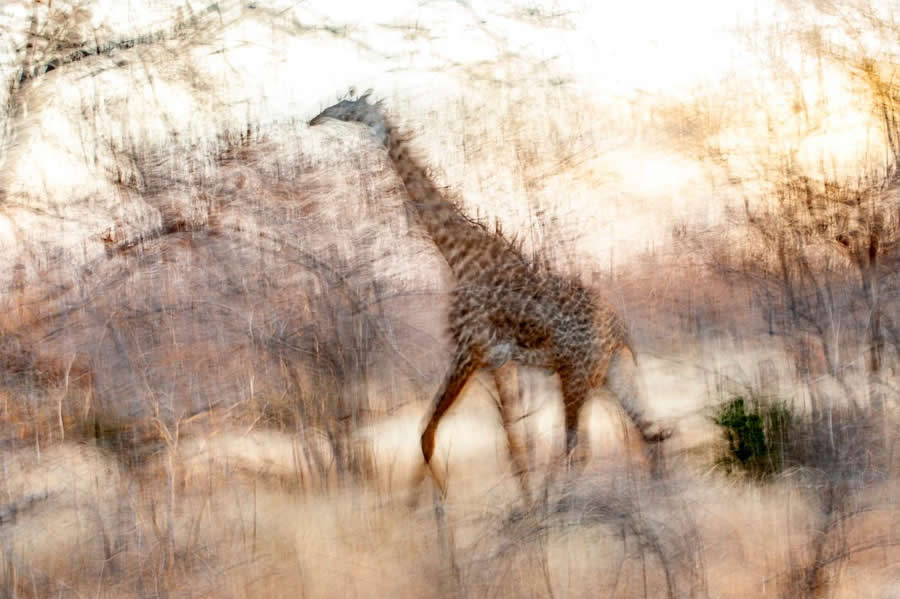
“A giraffe walking through the bush of Ruaha National Park at sunset and I decided to try and create a more creative image, using random camera movement and a longer exposure. It’s not really just a ‘panning’ image as I jiggled the camera about a bit randomly, although with intention. The light is soft and gentle and warm which helps.”
18. “Tiptoeing on Nature’s Canvas” by Philip J. Briggs, Kenya, Masai giraffe
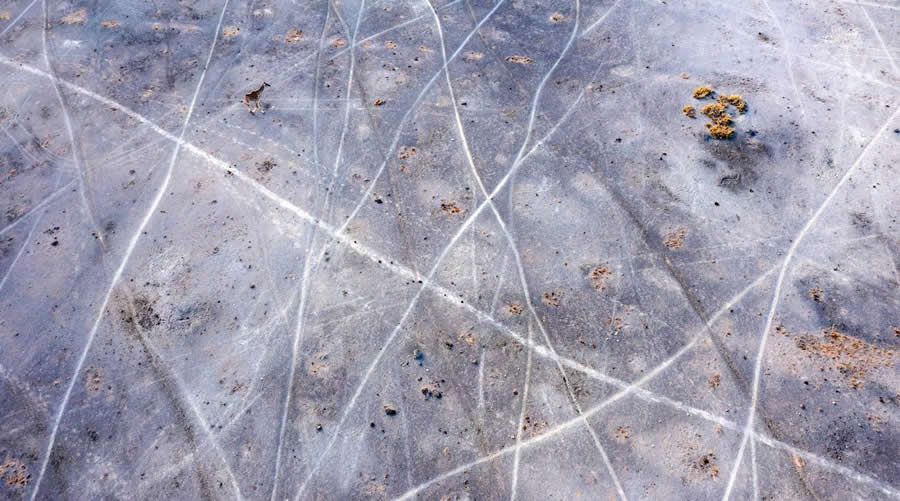
“From above, wild paths reveal a Masai giraffe tiptoeing across the dry, open canvas of the landscape, leaving a quiet, beautiful display of nature’s own artwork.”
19. “A mother’s love” by Thomas Nicholson, USA, Masai giraffe
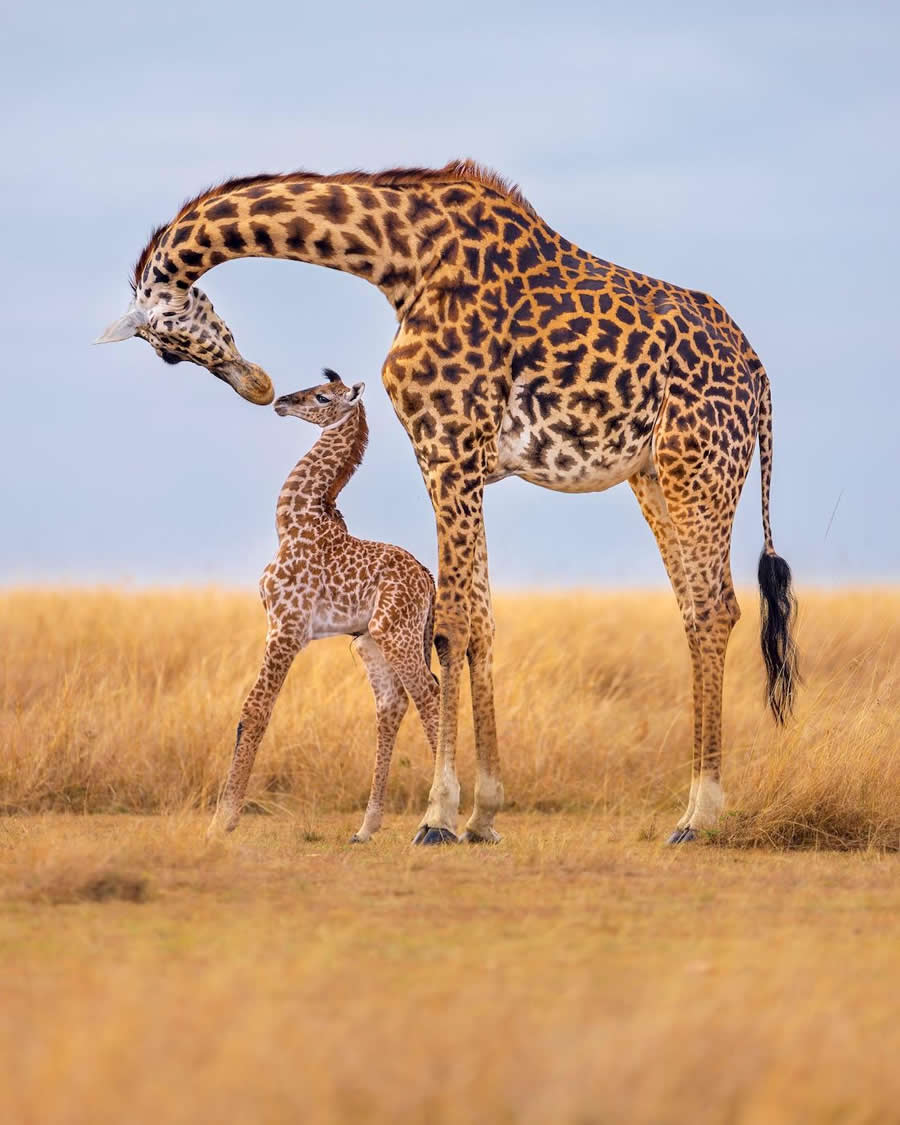
“We were on the lookout for a famous leopard in the Maasai Mara, patrolling her territory and hoping she would appear under a bush somewhere. Turning a corner, we instead found a mother giraffe with days-old baby, alone on the plains as they bonded. We were awed to be able to briefly observe their interaction, but at the same time concerned that the leopard would appear and try to capture the baby. Shortly after this interaction, they headed off over a hill, safe for another day.”
20. “The Language of Touch” by Mark Fernley, UK, Masai giraffe
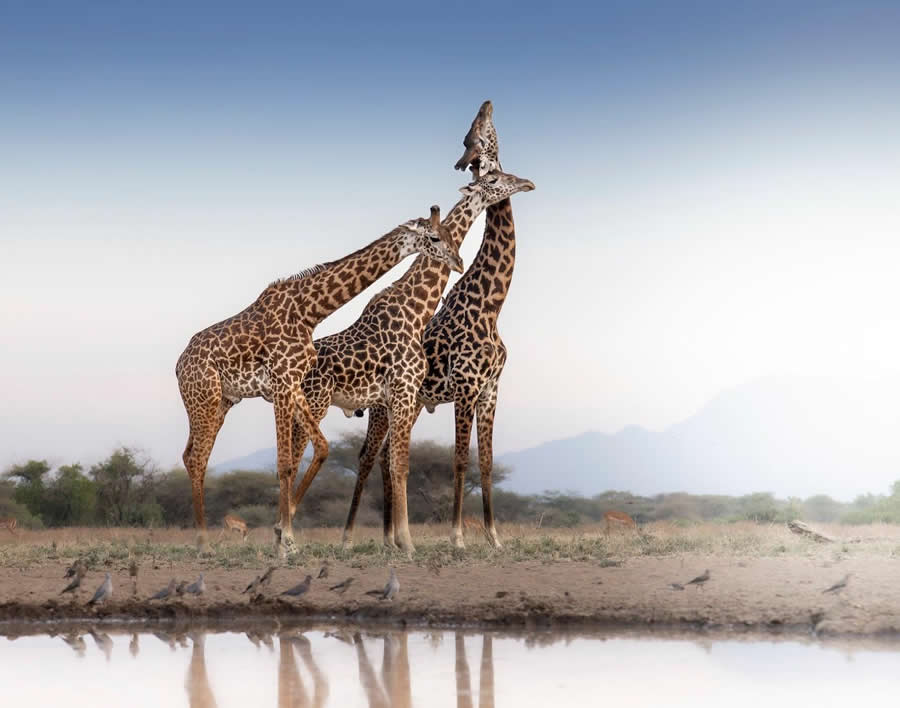
“At a quiet waterhole in the heart of Shompole Conservancy, near Shompole Wilderness, three Masai giraffe bulls stood framed against the vast southern Kenyan horizon. What began as a brief mating interaction between two of the males then unfolded into a rare and intimate display of calm connection. With no force, no dominance posturing, the trio gently entwined their long necks, rubbing together in a slow, deliberate exchange that lasted nearly twenty seconds.”
FAQs:
What is the Remembering Wildlife Giraffes Competition?
It is an international wildlife photography competition selecting 20 winning giraffe images for inclusion in the upcoming Remembering Giraffes conservation book, celebrating wildlife photography while supporting giraffe protection projects across Africa and beyond.
Why are giraffes endangered today?
Giraffes face serious threats from habitat loss, poaching, civil unrest, and fragmented ecosystems. Their numbers have fallen dramatically over recent decades, making conservation awareness and protective action more important than ever worldwide.
Who founded Remembering Wildlife?
Remembering Wildlife was founded by British wildlife photographer and conservationist Margot Raggett MBE. She launched the project after witnessing elephant poaching in Kenya and decided to raise funds for conservation through photography books.
When will Remembering Giraffes be published?
The Remembering Giraffes book is scheduled for release on 12 October 2026. It will feature competition winners and leading wildlife photographers, with proceeds supporting giraffe conservation and habitat protection.
How does Remembering Wildlife help conservation?
The project donates profits from book sales to wildlife charities and field projects. Since launching, it has contributed more than £1.26 million to dozens of conservation programs in countries worldwide.
Related Articles:
About the Author