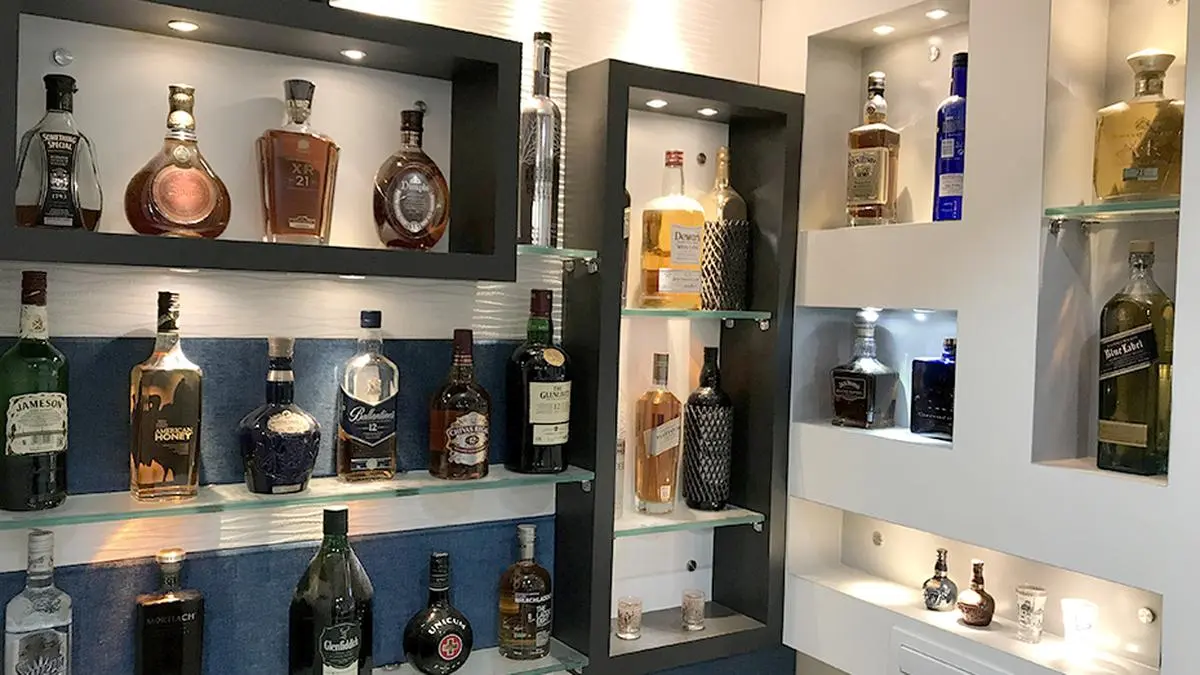
With several state governments easing excise norms for imported alcoholic beverages, and the UK-India free trade agreement set to reduce customs duties on Scotch and gin, concerns are mounting within India’s domestic alcobev industry. Industry associations warn that the growing substitution of Indian-made premium spirits with imported brands, often taxed more leniently, could erode state revenues and undercut local manufacturers, even as some players stand to benefit from cheaper inputs for blended products.
According to Anant S Iyer, Director General, Confederation of Indian Alcoholic Beverage Companies (CIABC), State governments collect more taxes from Indian-made products compared to BIO brands. The substitution of premium Indian whiskies with BIO brands could lead to net revenue loss for governments, as the decline in Indian product sales outweighs gains from BIO sales.
Alcoholic products made in India generate cumulatively over ₹3 lakh crores in taxes. Preferential treatment to BIO Spirits and wine brands may cause a shift in sales towards imported products.
“State governments are reducing excise duty and giving other concessions, such as a substantial reduction in brand registration fees for BIO brands in spirits and wines, meaning a product has become cheaper to import than to produce in India. The growth in the sales of BIO scotch has come at the expense of sales in Indian premium /luxury brands and bottled in India (BII) scotch, resulting in loss of revenue to state governments,” Iyer said.
When the Canteen Stores Department (CSD) stores of the Indian Armed Forces can stop purchasing imported alcoholic products, State governments should also safeguard the interests of Indian companies, he said.
In 2021, Maharashtra halved the BIO excise duty to 150%, a move that directly catalyzed a surge in imported liquor sales – from 5,000 to 42,000 cases per month, as per CIABC. Meanwhile, IMFL brands remain subject to excise duties of up to 300%, with high levies on premium segments. Following the duty cut, growth in IMFL sales within this category fell significantly, from 24% in FY23 to just 6% in FY24.
In Kerala, IMFL products attract an excise duty of ₹237 per proof litre and a sales tax of 25%, along with special taxes like the Special Tax on Non-Essentials (STN). Conversely, BIO brands are taxed more leniently, with special fees of ₹87 per proof litre and a sales tax margin of 115% minus an STN. As a result, BIO brands, particularly those in whisky and gin, have established a stronger retail and hospitality footprint in the state.
In Haryana, the excise policy effective from June 2025, to March 2027, permits BIO wines under the Indian Foreign Liquor (IFL) quota, while excluding Indian wines. Additionally, IMFL brands face higher brand label fees – up to ₹9 lakh for whisky – and VAT rates nearly four times those of BIO products. In contrast, BIO brands are subject to a flat ₹30,000 label fee across categories and a lower VAT of 3% plus 5% surcharge, creating a cost and distribution advantage that industry stakeholders say could lead to the substitution of Indian products with imports.
The CIABC representative noted that the UK-India FTA, under which the total customs duty on whisky and gin from the UK will be halved initially to 75% from 150%, with a gradual reduction to 40% over the next decade, could benefit domestic producers by lowering input costs for blends. On the other hand, it will be more economical for MNCs to import their products than to produce in India. Iyer also stressed the need for safeguards to prevent BIO products from being dumped at low prices or rerouted through third countries, which could impact the growth of premium Indian brands.
In an earlier conversation with businessline, Alok Gupta, Managing Director of Allied Blenders and Distillers Limited (ABD), shared that the reduction of customs duty reduces the cost of goods, having a favorable impact on the company’s gross margins. He also noted that Indian single malts are well-positioned for growth in international markets.
“As we build our super premium and luxury portfolio, it will also create better market access because we expect some reduction in the MRPs. Therefore, it should result in the expansion of the segment. However, domestic premium and super premium products need protection from dumping. A key ask from the Indian liquor industry has been that bottled goods should be bought into India with a minimum import price (MIP),” he said.
On the other hand, Sanjit Padhi, CEO, International Spirits and Wines Association of India (ISWAI), which represents companies like Bacardi, Diageo-United Spirits, and Pernod Ricard, argued that concerns about an influx of cheap Scotch are unfounded, as consumers choose brands over commodities.
He added that to align with premium Indian whisky pricing, Scotch’s Cost, Insurance, and Freight (CIF) would be set below cost, a commercially unviable scenario for suppliers.
“Domestic manufacturers stand to gain from reduced costs on bulk Scotch imports used in blending with IMFL, a benefit they have acknowledged. This presents an opportunity to enhance product quality while improving profitability. Ironically, the biggest beneficiaries of the UK FTA may be IMFL producers themselves, a point often overlooked amid the emotional rhetoric,” Padhi stated.
The expected reduction in consumer prices due to the FTA is likely to be around ₹100–₹200, as customs duty accounts for only 15–20% of the overall cost structure. A cut in customs duty would result in a 7–10% decrease in MRP, with most states already calculating prices from the CIF value, ensuring any benefit is passed to the consumers, he said.
As the policy landscape evolves, shaped by global trade agreements, shifting consumer preferences, and state-level excise reforms, the Indian alcobev industry finds itself at a crossroads. While imported brands gain ground under favorable duty structures, domestic producers are calling for a more balanced regulatory framework that promotes local manufacturing without stifling competition.
More Like This

Published on July 27, 2025
About the Author