
Custom Faceting – Precision Cutting Based on Material, Not Templates
Custom faceting is a made-to-order gemstone cutting process focused on the individual characteristics of each stone. Instead of working from a fixed catalogue or repeating standardized designs, every custom faceting project begins with an evaluation of the material itself. The goal is to determine whether the stone’s physical properties, optical potential, and structural integrity are realistically aligned with the intended cut design and final expectations.
This approach places material behavior at the center of the faceting process. Factors such as clarity, internal features, crystal structure, durability, and natural shape are considered before any cutting begins. Custom faceting is therefore not a mass-production service, but a controlled and deliberate workflow guided by the stone rather than by preset commercial patterns.
Evaluation of Rough and Preform Material
Custom faceting may involve client-provided rough material or stones selected specifically for a particular project. In both cases, the process starts with a detailed evaluation of the stone. This assessment includes clarity, inclusions, fractures, zoning, growth patterns, and overall suitability for faceting.

Optical performance is a key factor at this stage. Some materials may appear attractive in rough form but lack the internal consistency required for high-quality light return once faceted. Other stones may require compromises in design to maintain durability or avoid structural weakness. These limitations are identified early and discussed openly.
Cut design is selected based on the material’s characteristics rather than forcing a predefined pattern. This may involve adapting an existing faceting design, modifying angles, or simplifying facet arrangements to suit the stone’s natural geometry. The objective is to enhance optical performance while preserving material integrity.
Cut Design, Optical Performance, and Planning
Once the material has been evaluated, cut design planning begins. This stage takes into account the intended use of the stone, such as jewelry, collector display, or technical study. Decisions related to symmetry, proportions, and light behavior are balanced against durability and yield.
Optical performance is prioritized over maximizing weight retention. While yield is considered, it does not override the need for proper angles, meet-point accuracy, and consistent polish. Each design choice is informed by how the stone is expected to interact with light once finished.
This planning stage is essential for realistic outcomes. By addressing technical constraints early, the faceting process can proceed with clarity and purpose, reducing the need for corrective adjustments later.

Precision Faceting Process
The faceting process itself emphasizes precision, symmetry, and polish quality. Each stone is treated as an individual project, allowing adjustments during cutting when the material requires it. Meet-points are monitored closely, and angle accuracy is maintained to ensure consistent facet alignment.
Unlike automated or volume-based workflows, custom faceting allows for flexibility. As internal features become visible or unexpected behavior emerges, the cutting approach may be adjusted accordingly. This responsiveness is a defining characteristic of precision faceting and is not achievable through rigid, template-driven processes.
Polishing is approached with the same level of care. Different materials respond differently to polishing techniques, and achieving a clean, even finish requires patience and controlled execution. The aim is not surface shine alone, but a polish that supports optical clarity and long-term stability.
Finishing, Documentation, and Evaluation
Once faceting and polishing are complete, the stone undergoes a final evaluation. Symmetry, meet-point precision, surface finish, and overall visual balance are assessed under controlled lighting conditions. Where appropriate, the stone is also examined under natural light to evaluate real-world performance.
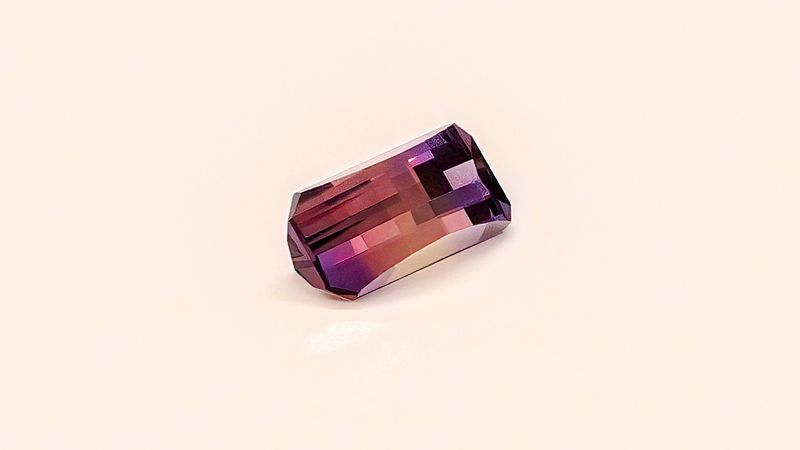
Finished stones are documented through high-quality photographs and, in some cases, video recordings. This documentation provides transparency and allows for an accurate representation of the final result.
The evaluation stage ensures that the finished stone reflects the original goals of the project while respecting the limitations of the material. Overworking or unnecessary re-cutting is avoided in order to preserve structural integrity.

Communication, Transparency, and Expectations
Because every custom faceting project is unique, timelines, outcomes, and finishing details are discussed in advance. Clear communication is maintained throughout the process, with an emphasis on realistic expectations and material-driven results.
Custom faceting does not promise perfection, but it does prioritize transparency, technical honesty, and informed decision-making. This approach ensures that the final stone reflects both the natural potential of the material and the intent behind the cut.
Projects are accepted selectively to maintain consistent standards and allow sufficient time and focus for each stone. This limitation supports quality control and avoids rushed or compromised outcomes.
Custom Faceting as a Craft-Based Practice
Custom faceting is best suited for collectors, jewelers, and enthusiasts who value craftsmanship, technical understanding, and process transparency. It is not intended for high-volume commercial production, but for carefully considered work where each stone is treated as a distinct technical and aesthetic challenge.
Every finished stone represents the outcome of material evaluation, design planning, precision cutting, and controlled polishing. The result is not just a faceted gemstone, but a documented process shaped by experience, technique, and respect for the material.
Contact and Project Discussion
If you are considering a custom faceted gemstone or would like to discuss a potential project, you are welcome to get in touch. Each inquiry is handled individually to determine whether custom faceting is the appropriate approach for the material and objectives involved.
Discover more from GottaPics
Subscribe to get the latest posts sent to your email.
About the Author