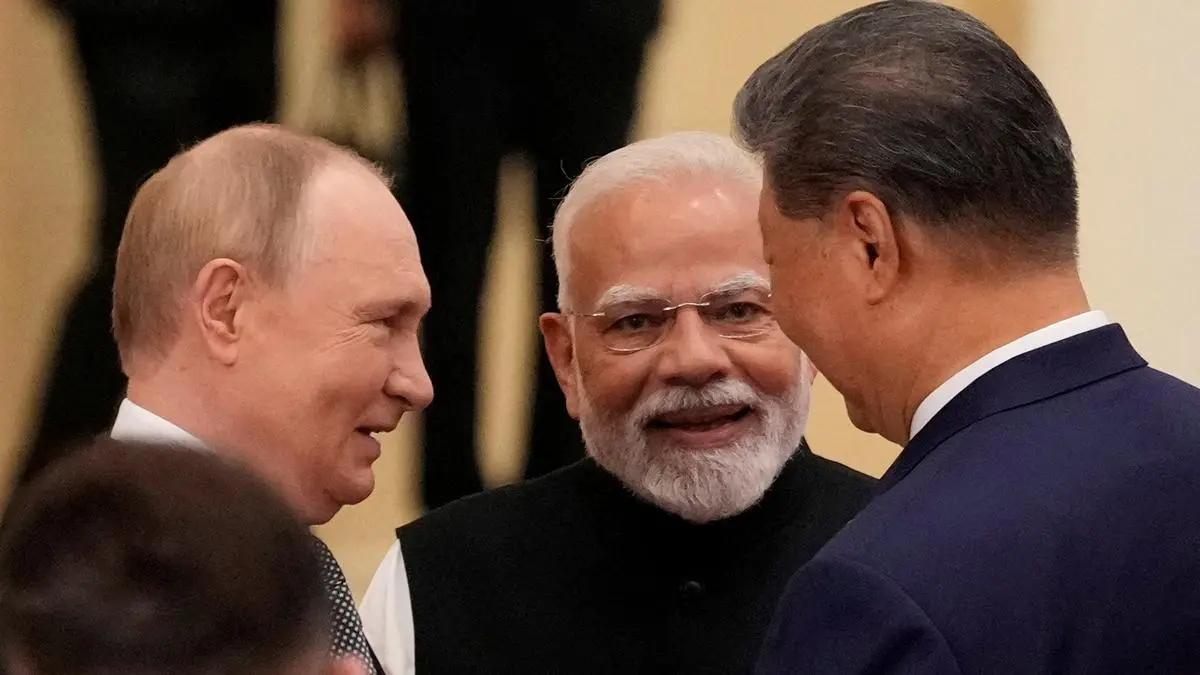
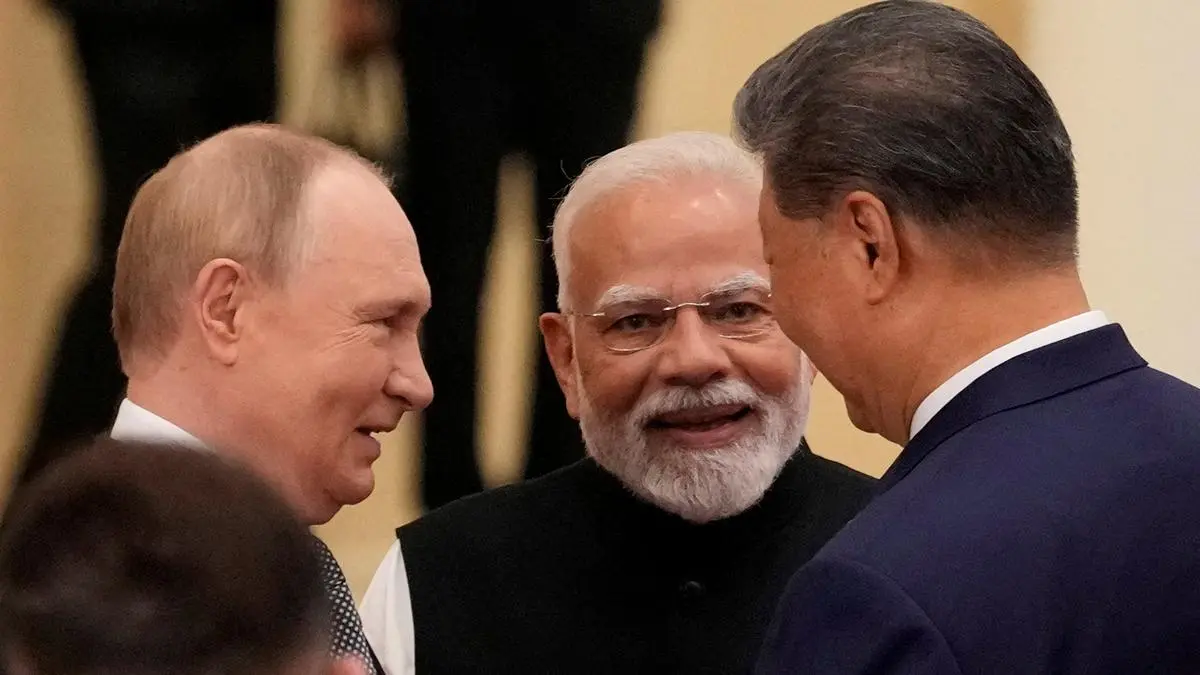
The US President, who had set out to take on Presidents Putin and Xi, has ended up taking on Prime Minister Modi
| Photo Credit:
SUO TAKEKUMA
The bonhomie and good cheer, even if only for the cameras, was unmistakable. The Shanghai Cooperation Organisation (SCO) that held its summit in Tianjin in China over the last two days was eclipsed by the Modi-Xi and Modi-Putin meetings. The three leaders have left no one in any doubt that they intend to present a united front to President Trump, if not necessarily the US.
The US President, who had set out to take on Presidents Putin and Xi, has ended up taking on Prime Minister Modi — who has responded by making common cause with the first two. By coming together, the three leaders have sent out a powerful signal to Trump, even if concrete on-ground moves flowing from the meetings will have to be awaited. The Indian signalling, via no less than a visit by the Prime Minister, has been so strong that the US embassy in India put out tweets on Monday morning saying how good India-US relations are and how the relationship is growing in strength. This surely comes as a surprise, after the remarkable and sustained belligerence from the White House and its close aides in recent weeks. Even so, it would be naive to assume that India has moved closer to China, or that its ties with the US have been ruptured beyond repair. As for Russia, as this newspaper had noted earlier, bilateral relations have been cordial, notwithstanding some predictable ups and downs. Russia has stood by India economically, diplomatically and militarily for 70 years. India has reciprocated to the extent it can.
It’s the relationship with China, however, that is a problem. There are two major sticking points. One is, of course, the boundary question. The other is China’s strategy of using Pakistan as a counter to India. The former has remained unresolved for 70 years. The latter started in 1965 when Pakistan attacked India. Given this, it must be a matter of deep satisfaction to the Indian delegation that the SCO summit acknowledged terrorism and the attack in Pahalgam by Pakistani terrorists. At the SCO Defence Ministers meeting in June, Defence Minister Rajnath Singh had refused to endorse the joint declaration as it failed to mention the Pahalgam attack.
As to the boundary question it has always been China’s stand that it should be delinked from trade and investment between the two countries. By 2010 India had accepted this but in 2018 it was China that reignited the boundary issues. It has now decided to revert to the pre-2018 position. This is also a very positive outcome for India. But what happens next is not clear. Much will depend on whether China lifts its embargo on the sale of items that are important to Indian industry such as rare earth minerals, tunnel boring machines and fertilizers. Even if it does, its tendency to use trade as a weapon of coercion has a long history, as countries like Japan and Australia can testify. In sum, so far so good because Trump has been put on notice that India has other options. That badly needed to be done. Meanwhile, an interesting set of optics, engaging India no doubt, will unfold on the global stage in the near future.
Published on September 1, 2025
About the Author