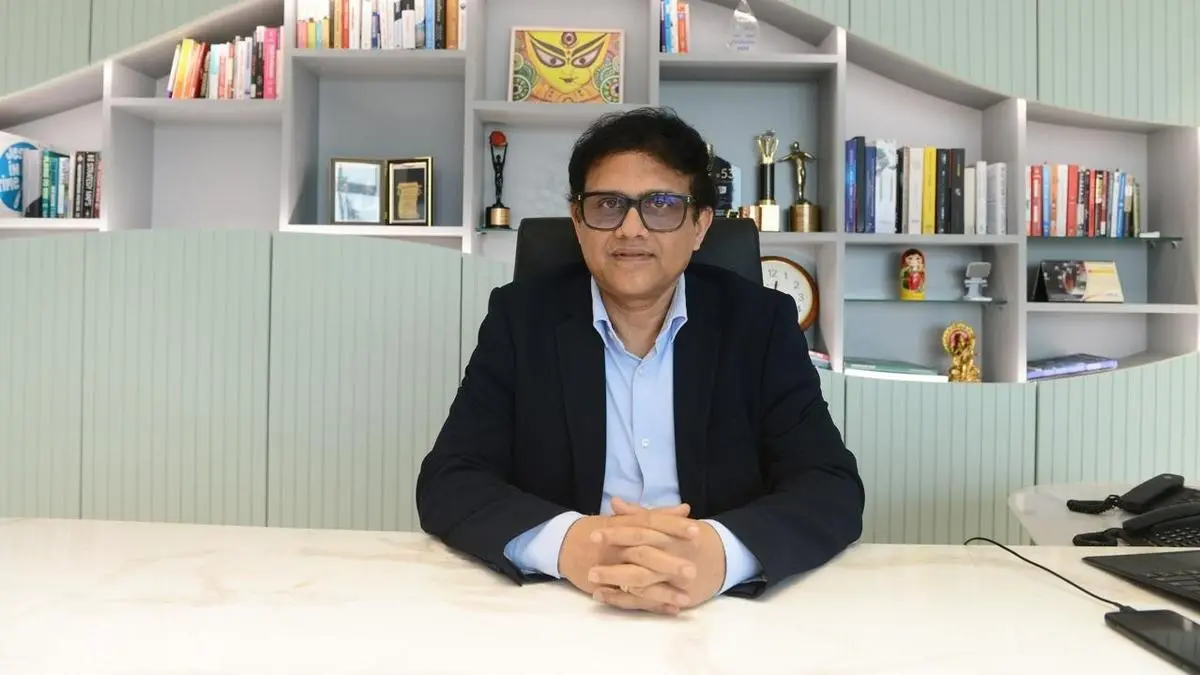
When operating profit declined for everyone in the paints industry, a combination of better gross margin and lower cost, helped Berger Paints register an operating profit margin growth in the first quarter this fiscal, says its Managing Director & CEO Abhijit Roy. In an interview with businessline, Roy said the company has earmarked capital expenditure of over ₹2,000 crore in the next three years for greenfield and brownfield projects to expand production capacity further as it wants to grow its market share continuously amidst heavy competitions. Excerpts:
Amidst heavy competitions within the paints industry, how was Berger Paints able to expand its EBITDA margin and market share during the first quarter this fiscal?
We are the only company which registered the highest growth amongst the major organised listed players during the quarter. Mainly the growth came from automotive and decorative coatings. In the decorative segment we have a lot of scope for growth, largely because of ongoing distribution expansion. We had installed about 8200 colour bank tinting machines in the last financial year. And this year, we have set a target of installing at least 10,000 tinting machines. In the first quarter, we managed to install 2500 machines. So, this is one of the reasons, which is the expansion of the network. There is still a lot of scope in that, and we can keep expanding this particular network to grow. Secondly, we have done well in certain areas like construction chemicals, waterproofing and wood coating segments, which registered a strong double-digit growth. That is also helping us to grow at a slightly faster pace than possibly other players in the industry. So overall, our execution in terms of network expansion and also the sale of these types of product categories which are doing well are helping us to grow at a slightly faster pace than the industry. During Q1, we saw an overall volume growth of 5.7 per cent year-on-year.
As far as profitability is concerned, operating profit for the industry in general declined in Q1. We were the only listed company that actually increased operating profit. For everyone else, it declined. The growth in our operating profit was again related to two factors. Firstly, compared to the first quarter last fiscal, our gross margin itself expanded in Q1FY26 because of a better product mix as we sold more better quality products with higher profits. Secondly, this fiscal, we utilised the Sandila plant (in Uttar Pradesh) capacity much better, and hence the overhead costs as a percentage went down. Last fiscal, this plant came into operation and therefore we were using it sub-optimally.
How much market share gain did the company witness in the first quarter year-on-year? And what is the outlook going forward?
We grew from about 20.2 per cent to about 21.4 per cent. So, that is over 1 per cent or 100 basis points market share gain in Q1FY26.
We plan to further expand our network because there is a huge scope there. And possibly some new product introductions. There are some product gaps which have to be filled up. One new product, called Colour Plus, has just been launched. It is a premium emulsion for interior paintings, and it is doing quite well. The construction chemical and waterproofing range is also doing well. There are some products which are doing much better than possibly most other companies. Our industrial business is also growing reasonably well, so is likely to continue. And then construction chemicals, waterproofing and the wood coatings segments are already growing, and we will continue to further grow that market.
It has been more than a year now that Birla Opus Paints entered the industry. Currently, what kind of competition are you facing?
Initially, because they were coming in fresh with a sizable fund being spent, it created a lot of buzz They had done a lot of homework for the last two years, studying dealers and understanding which dealers would possibly do it. Initially, they installed tinting machines in dealer counters. Now, the pace of installation of tinting machines is going down for them from a very high level. We already have a large number of machines, and we are still installing about the same numbers as they are doing at present. This means the initial gains they would have otherwise achieved are diminishing. The second part is related to the sale of the products. In paints, just installing machines is not enough, the material volume has to be sold. Now we are seeing the initial energy or noise that was there has reduced considerably in the marketplace.
Also, they have started withdrawing some of the benefits which they were giving. Once they start withdrawing more and more of the benefits and the price differential, it is likely to put some pressure on the sales. Currently they are able to give higher profits to the dealers. But when the profits come down, then it might become difficult to sustain the sales momentum.
What is Berger’s current production capacity of decorative paints? What are plans for capacity expansion in the next three years?
We have around 1.1 lakh tonnes per month production capacity. This fiscal, we are expanding at our Hindupur plant (in Andhra Pradesh) for industrial paints This expansion will be completed by December this year. We will begin work on our Panagarh plant (in West Bengal), a greenfield project to produce mostly industrial paints and construction chemicals, possibly around April-May next year. And, hopefully, it can get completed in one year or one-and-a-half years time frame. We will also start work on the greenfield Odisha plant. The Odisha plant will take about two years to complete. This plant will produce decorative and industrial paints as well as construction chemicals. Production capacity of decorative paints will expand by around 40,000 tonnes after completion of these projects.
What would be total capital expenditure for these greenfield and brownfield projects?
Capital expenditure for Panagarh and Odisha plant would be around ₹1,800 crore. And for the Hindupur plant brownfield expansion we will be spending around ₹220 crore. We will fund this capex through internal accruals.
About the Author