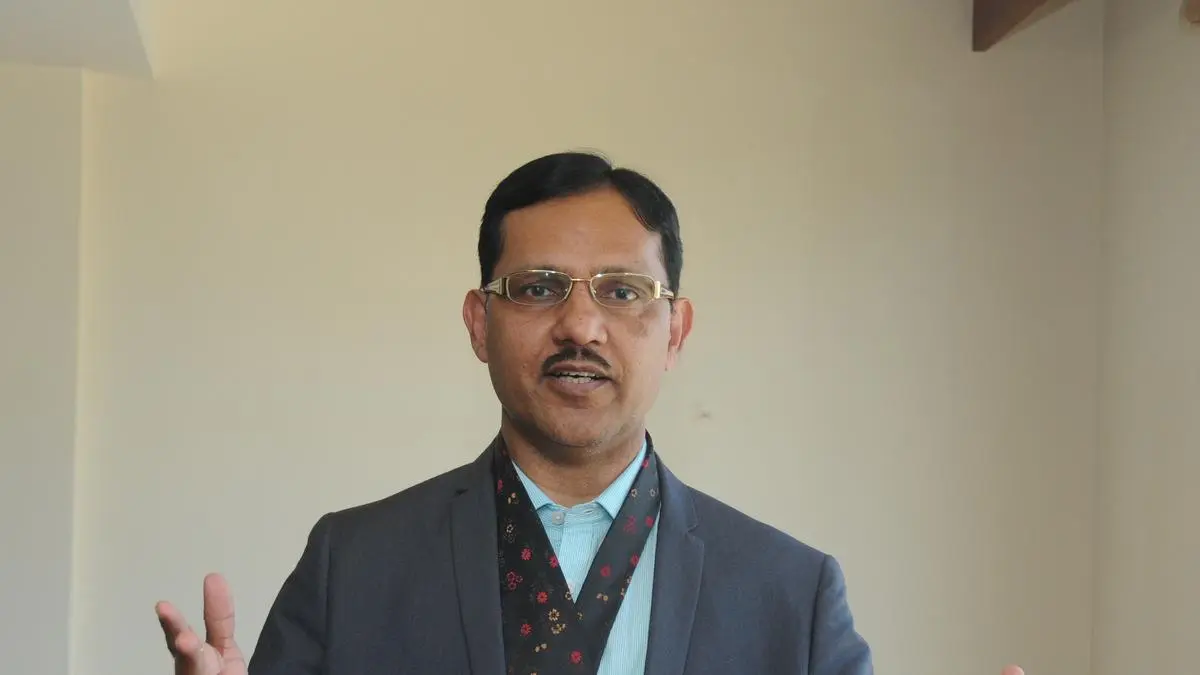
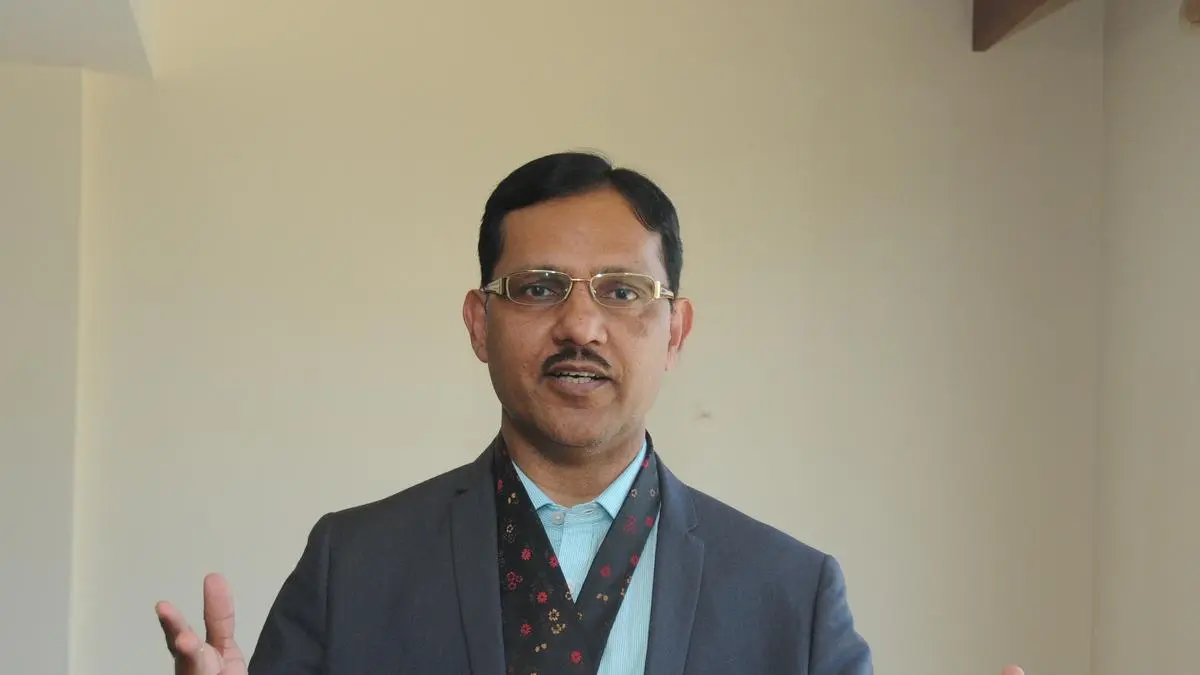
Ashok Chandak, President of SEMI India and IESA
| Photo Credit:
SOMASHEKARA GRN
Demand for manufacturing in India’s semiconductor sector will grow substantially in coming years with Indian corporates showing more interest in the work, said Ashok Chandak, President of SEMI India and IESA.
Speaking to businessline about the state of the semiconductor sector in India, Chandak conceded that currently most global companies in India are committed to semiconductor design owing to the country’s reputation for its chip design or technology development talent.
However, on the manufacturing side, he said the biggest challenge currently is India’s own demand, which he expects to increase to about $103 billion by 2030.
“There is sizable demand in India itself, which is one of the carrots for companies to invest. There are several companies that have interacted with India because of the design aspect and have understood the Indian climate’s business model, skilling and competence. That helps us compared to other Asian countries like Malaysia, Vietnam and the Philippines. Global design centres of global multinationals also keep visiting India, so there is a visibility for us,” said Chandak, noting that nearly 70 per cent of companies registering for Semicon India this year are manufacturing-related companies.
The industry leader pointed out the growing interest by Tata, Verukappa group, collaboration between HCL Tech and Foxconn, Keynes as well as smaller projects such as RRP in Mumbai, Suchi Semicon in Surat, Polymatech in Chennai and RIR Ratan Shah in Odisha.
Regarding global politics, he said the Make-in-America will hurt Make-in-India just like it will affect other countries. However, India will still be able to get sizeable opportunity in the sector.
“Last year, the global semiconductor market was $650 billion and more than half is supplied by the US-headquartered companies. However, they do most of the wafer manufacturing or assembly outside of the US. The current President and administration is pushing many companies to return to the US. That would impact ambitions of any country, including in India, looking for manufacturing activity in the country,” he said, adding that despite this impact, India will still have a sizeable part of the semiconductor pie.
When asked whether such developments could push back India’s semiconductor plans, Chandak said the country will be hard-pressed to attract companies but its goals remain feasible enough. He also did not view current US-China dynamics as a big concern for India.
“Before tariff, US was still selling to China, which in turn was selling anywhere it wanted. India’s Semicon programme was planned with that scenario in mind. If US puts more restrictions on China, that’s an advantageous position for countries like India surely but even if it does not happen, we’re just back to the situation 4-6 months ago,” said Chandak.
More Like This
Published on July 20, 2025
About the Author